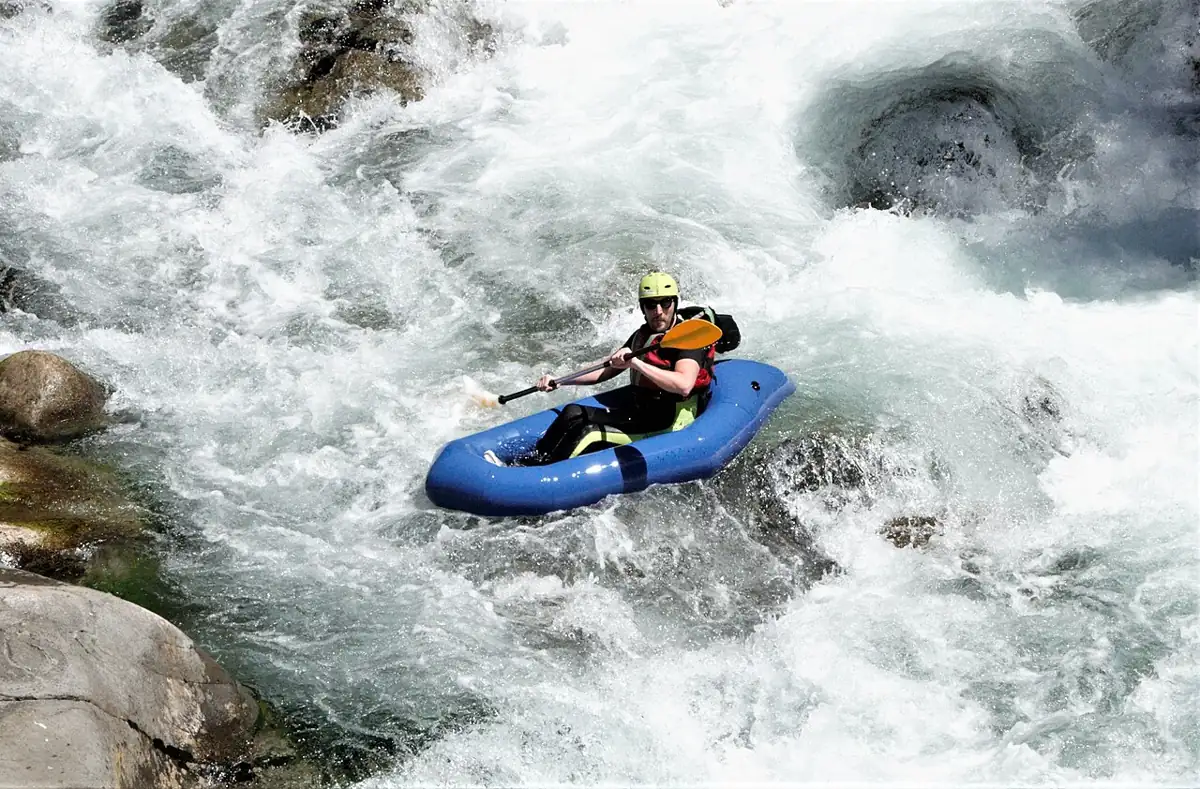
Trip notes · Tasmania
Packrafting the Picton River
A tea-coloured forest river an hour from Hobart that rises after winter and spring rain, with grade 2 to 3 rapids that suit paddlers building skills.
Last checked November 2026
The Picton is a forest river in the Huon Valley, about an hour's drive south-west of Hobart. It drains the wet country below the Hartz Mountains and the Snowy Range, runs through tall eucalypt and myrtle forest, and joins the Huon above Huonville. Local kayakers and rafters treat it as one of the go-to day runs in southern Tasmania after rain. For packrafters it is a good place to build grade 2 to 3 skills close to Hobart.
Tannins from the forest stain the water the colour of tea, and it is cold. The banks are thick with scrub, and fallen timber is the hazard to watch for.
Where to paddle
The Picton is reached from Geeveston via the Arve Road and the forestry roads that branch off it towards the Tahune area and the upper Huon. Paddlers use a handful of bridge and roadside access points along these roads. Which one you pick depends on the level and how long a day you want.
| Option | What to expect |
|---|---|
| Upper Picton (higher put-ins on the forestry roads) | Tighter, steeper water with more wood and harder rapids; for confident grade 3 paddlers |
| Middle Picton to the Huon | The commonly paddled day run; continuous grade 2 to 3 rapids between pools |
| Lower river and the Huon junction | Easier water and longer flat stretches; a good warm-up or a short family float at low to moderate levels |
Road names and closures in the Huon forests change with forestry operations, so ask local paddlers or a club before you go. The Tasmanian canoe and kayak clubs post trip reports and current access notes, and they are a good way to find out about recent wood in the river.
Grade
At a moderate level the main day run is mostly grade 2 with grade 3 rapids. As the river rises, rapids wash together, eddies get smaller and the whole run moves closer to grade 3 to 4. At low levels it is a rocky scrape with lots of short, technical drops. Grades on a rain-fed river like this shift with every flood, so read our page on river difficulty grades and treat any guidebook figure as a starting point.
Season and water levels
The Picton depends on rain. It is most often runnable from late autumn through to spring, roughly May to November, when fronts come through from the west. It can also come up after a big summer storm. It falls back quickly after rain stops, so the best days are usually the day of or the day after a good soaking.
- Check the Bureau of Meteorology rainfall totals for the Huon Valley and the Hartz area over the previous 48 hours.
- Look up the Picton and upper Huon river levels on the BOM or Tasmanian government water data sites.
- Ask in a local paddling club group what level they consider low, good or high for the section you plan.
- If the river is rising fast and brown, choose a lower section or come back another day.
The flows and gauges guide explains how to compare a level reading with the trend over a few days.
Access and permits
Most of the land along the Picton is state forest or reserve. A day trip does not usually need a paddling permit, but forestry roads may be gated for logging, fire danger or road works, and log trucks use them on weekdays. Drive with headlights on and give trucks the road. If you go further in, past Tahune, to places that are part of a national park, every person needs a current Tasmanian parks pass.
Fire restrictions apply across southern Tasmania in summer. A day run needs no fire at all; if you camp, use a fuel stove.
Safety
- Cold water all year. In winter the river can be only a few degrees above freezing. Wear a drysuit or a thick wetsuit, gloves or pogies and a warm hat under the helmet.
- Wear an AS 4758 PFD and a helmet; carry a throw bag and a knife.
- Paddle with at least three boats so one can help with a swimmer while another chases gear.
- Mobile reception is patchy in the valley. Leave your plan with someone in town.
- Days are short in winter. Start early and plan to be off the water with an hour of light in hand.
Logistics
Geeveston is the last town with fuel and food before the forest. From Hobart it is roughly an hour's drive down the Huon Highway. A two-car shuttle along the forestry roads is usually short. After the run, get warm before the drive home: leave a thermos and a full change of dry clothes in the car on winter days.
Packraft notes
- A whitewater packraft with thigh straps and a spray deck or self-bailer suits the Picton best. Light open boats work on the lower river at moderate levels.
- Short eddies and quick decisions make a good boat-scouting routine important: lead boat signals, others hold in eddies.
- Wood in the river means a lot of short scouts on foot. Wear footwear that grips wet logs and rock.
- If you are new to cold Tasmanian water, read the drysuit and layering guide first.
Once you are steady on the Picton, the Mersey gives more reliable water in the north, and the Franklin is the long-term goal for many Tasmanian paddlers. The Tasmania trip notes compare all three.
Picton River questions
Where is the Picton River?
In the Huon Valley in southern Tasmania, west of Geeveston. It rises in the forests below the Hartz Mountains and the Snowy Range area and joins the Huon River upstream of Huonville.
When does the Picton run?
It is rain-fed, so it runs after decent rain, most reliably from late autumn through spring. In a dry summer it can be too low to paddle.
What grade is the Picton?
The commonly paddled section is mostly grade 2 to 3, getting harder as the level rises. Treat the grade as a guide only and scout anything you cannot see.
Do I need a permit?
Most access is through state forest and reserve land, and no paddling permit is usually needed for a day trip. Some roads cross managed forestry land and can be closed for logging or fire risk, so check access before you drive.
Is the Picton good for a first packraft trip?
It is a reasonable step after easy grade 2 rivers, at a moderate level and with experienced paddlers. It is not a beginner run in high water, and the water is cold all year.