Reference · FAQ
Packrafting questions, answered
The questions people ask most often at put-ins and trailheads, with links to the pages that cover each one in depth.
Each answer gives you the short version and points to a longer page for the detail. If a question you have is missing, or an answer looks wrong, the contact page explains how to send a note.
Boats and gear
What is a packraft, exactly?
It is a one- or two-person inflatable boat built to be carried in a backpack, usually weighing somewhere between about 3 and 12 pounds depending on design. You paddle it with a kayak-style double-bladed paddle. The beginner primer explains how it fits into hiking and river trips.
How much does a full packrafting kit weigh?
A light flatwater setup with boat, four-piece paddle, life jacket and inflation bag can come in under 10 pounds. A whitewater setup with a heavier boat, spray deck, helmet and drysuit often doubles that. The packing list breaks the weight down item by item.
Do I need a spray deck?
On flatwater and gentle moving water you can usually skip one. Once waves start breaking over the bow, a deck keeps you warmer and keeps the boat from filling. The page on spray decks and skirts compares the main styles.
Is a self-bailing packraft better than a decked one?
It depends on the trip. Self-bailers drain water through the floor and are easy to get back into, which suits warm desert rivers and splashy rapids, but you sit in water all day. Self-bailing floors are covered in detail on their own page.
Can two people share one packraft?
Yes, tandem packrafts exist and they are common for couples or a parent with a child. They are slower to turn and heavier to carry than two solo boats. See tandem packrafts for the trade-offs.
What size packraft do I need?
Size mostly follows your height and leg length, then what you carry. Your feet should brace against the bow tube with knees slightly bent, and a boat that is too big feels loose and slow to respond. Tall paddlers and people carrying a lot of gear move up a size. The guide to sizing and fit explains how to test it.
Is a packraft the same as an inflatable kayak?
No. A packraft is built to be carried far, so it is lighter and rolls smaller, with a round, buoyant hull that rides over waves. An inflatable kayak is longer, tracks better on flat water and is faster over distance, but it is heavier and bulkier to carry. The comparison of packrafts, inflatable kayaks and hardshells goes through when each makes sense.
What are cargo zippers for?
A zipper in the stern tube lets you pack gear inside the boat's air chambers. Weight sits low and out of the way, which keeps the boat stable and the deck clear, and the bags cannot snag on rocks or tear off in a flip. The trade-off is one more thing to keep clean and lubricated. Read about inner-tube storage before choosing one.
What fabric should a packraft be made of?
Most modern boats use nylon coated with TPU and welded seams. Heavier fabric on the floor resists abrasion, while lighter tubes save weight. Desert canyons and rocky creeks wear boats faster than lakes. The page on fabrics and construction explains deniers and coatings.
Should I buy a used packraft?
A used boat can be a good way in if you inspect it carefully. Check the seams, the valve, the floor where it meets the tubes, and any patches, and inflate it overnight to see whether it holds air. The used packraft checklist lists what to look for.
Paddles, life jackets and other gear
What paddle should I use with a packraft?
A four-piece kayak-style paddle that breaks down to fit in or on your pack. Length depends on the boat width and your height, and many paddlers use something longer than they would in a hardshell kayak. Blade size is a trade between power and fatigue. See choosing a packraft paddle.
What kind of life jacket works best?
A paddling life jacket with a short torso and large arm openings, so it does not ride up when you sit low or fight a pack hip belt. In the US, choose a Coast Guard approved jacket and read the label for the intended use. The page on life jackets for packrafting covers fit and features.
How do I inflate a packraft without a pump?
Most packrafts come with an inflation bag. You trap air in the bag, roll it down and squeeze the air into the boat, then top up the last bit by mouth. The inflation guide walks through the routine, and inflation bags and pumps compares the options.
Drysuit or wetsuit?
A drysuit keeps you dry and lets you layer underneath, which suits long days and very cold water. A wetsuit is cheaper and tougher but leaves you damp, which is fine for short swims in milder water. The page on drysuits and layering explains how to choose.
What shoes should I wear?
Something that protects your feet on rocky banks and portages, drains water and stays on in a swim. Many people paddle in light hiking shoes or river shoes, and in cold water add neoprene socks. See packrafting footwear.
Are thigh straps worth it?
For whitewater, yes. They lock your knees to the boat so you can lean, brace and roll the hull with your hips. On flatwater most people skip them. Thigh straps and backbands explains how they connect.
How do I keep gear dry?
Use roll-top dry bags inside the boat or in the cargo zip, and double-bag anything that must stay dry, such as a sleeping bag or a phone. A pack liner works for short floats. The dry bag notes cover sizes and closures.
Safety and skills
Can I take a packraft on whitewater?
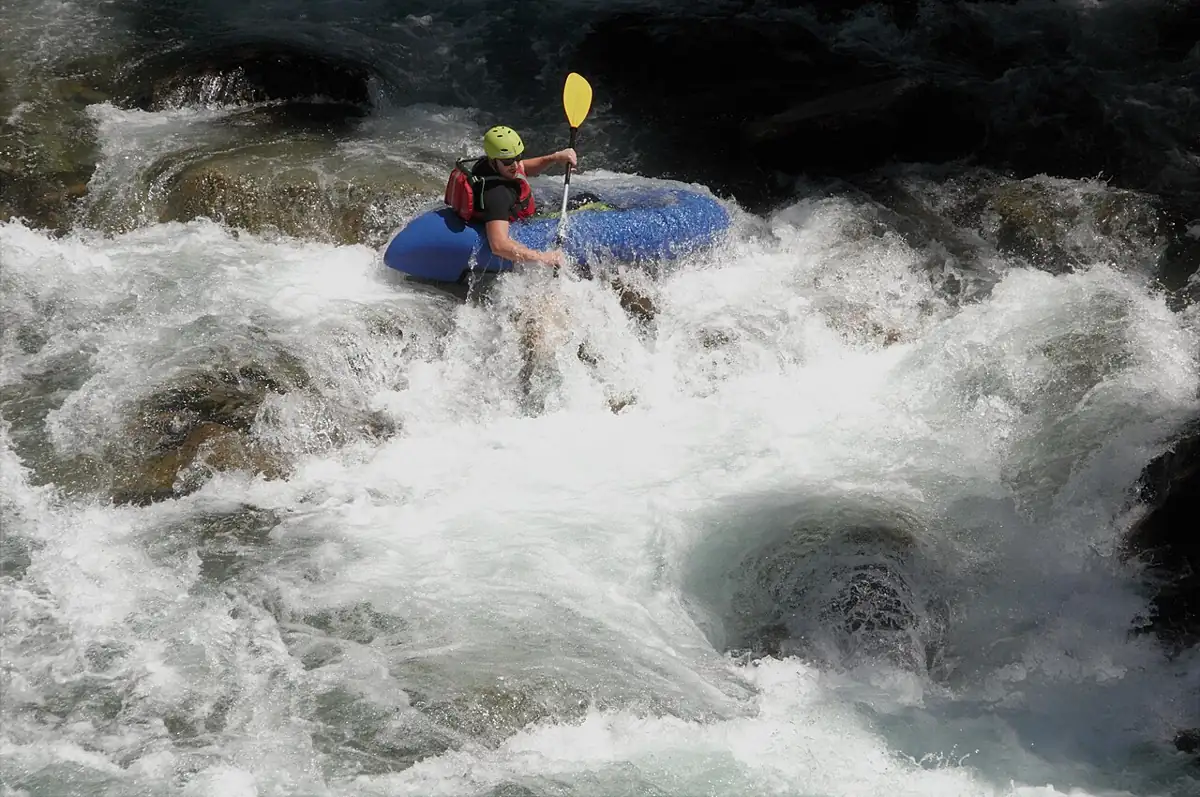
Modern whitewater packrafts handle Class III and sometimes harder water in skilled hands, and what usually limits you is your rescue skill. Learn to swim a rapid and re-enter your boat on easy water first. The guide to river difficulty classes explains the grading.
What should I wear on a cold river?
Dress for the water temperature, not the air. Snowmelt rivers in the Rockies can be in the 40s °F even on hot days, so a drysuit or a thick wetsuit is standard. The cold water safety page explains why the first minutes of a swim are the most dangerous.
Do I need a helmet?
On any river with rocks you could hit during a swim, yes. On a lake or a slow, deep float it is usually optional. Paddling helmets have their own page covering fit and certification.
How do I get back in after a flip?
Most paddlers grab the bow line or the side of the boat, kick their legs up to the surface, and pull themselves in across the stern or side. It takes practice, so try it in calm, warm water first. The self-rescue guide has the step-by-step version.
How do I know whether a river is running at a good level?
Look up the nearest stream gauge, usually run by the USGS, and compare the reading with what guidebooks or trip pages recommend for that section. A small river can be scrapy at one level and dangerous at three times that. The page on river flows and gauges explains how to read the data.
What are the hazards I should learn to recognize?
Strainers and sweepers (trees or debris water flows through), low-head dams, undercut rocks, holes and pinning rocks. You avoid most of them by learning to read current lines, eddies and waves. Reading whitewater covers what each feature looks like.
Should I paddle alone?
Paddling with at least one other boat is much safer, especially on moving water, because a partner can help after a swim. If you do go solo, stick to water well within your skill, carry a way to call for help, and leave a trip plan with someone at home.
What paddle strokes do I need to learn first?
A forward stroke that keeps the boat straight, a sweep stroke to turn, a back stroke to slow down, and a draw to move sideways. Packrafts spin easily, so a smooth forward stroke takes practice. The paddle strokes page describes each one.
Is it worth taking a course?
Yes, especially before moving up to whitewater. A course gives you supervised practice at swimming rapids, re-entering the boat and rescuing others, which is hard to learn from pages and videos. The notes on packrafting courses explain what a good one covers.
Trips, permits and care
Do I need a permit to packraft a river?
It depends on the river. Many stretches need nothing, while places like the Grand Canyon, Desolation Canyon and the San Juan run permit systems through the National Park Service or BLM. Each trip page names the managing agency so you can check current rules.
Who manages the rivers I want to paddle?
Often the National Park Service, the Bureau of Land Management, the US Forest Service or a state agency, and sometimes tribal governments. A single trip can cross several jurisdictions. The managing agency sets permits, camping rules and group sizes, so check its official page before you go.
Can I hike a packraft into a national park?
In many parks you can, but rules on boating, backcountry camping and launching vary by park and by river. Some require a river or backcountry permit, and a few restrict boating in certain areas. Check the park's own website for current rules.
What is a good first overnight packraft trip?
Look for flatwater or easy Class I and II water, short distances and simple logistics. In Utah, Labyrinth Canyon on the Green River is a popular choice for exactly those reasons. In Colorado, the float through Ruby and Horsethief canyons is another common first overnight.
How do I plan a packraft trip?
Start with the river: section, length, difficulty and the flow you need. Then sort out permits, shuttles, camping and a bail-out plan, and build the gear list around the water temperature. The step-by-step guide to planning a packraft trip covers the order.
Can a packraft handle the Grand Canyon?
Skilled paddlers have packrafted it, often alongside larger rafts that carry the group gear. It is big water, cold below the dam and needs a National Park Service permit. The Grand Canyon trip page explains the permit system.
How should I camp on a river trip?
Use established sites, pack out all trash, follow the agency's rules for human waste and fire, and camp well above the water line if the river could rise. The leave no trace page applies the principles to river travel.
Can I bring my dog?
Plenty of people do. A dog needs its own life jacket, short nails or a floor protector, and time to get used to the boat on calm water. Read the notes on paddling with a dog before a river trip.
How do I fix a hole on the trip?
Dry the area, clean it, and apply tape or a patch with the right adhesive for your fabric. Carry a small kit every time. The repair guide covers field fixes and permanent ones.
How should I store a packraft between seasons?
Rinse it, dry it completely inside and out, and keep it loosely rolled or hanging in a cool, dark place. Heat and tight folds left in for months wear a boat out faster than paddling does. See care and storage.
How long does a packraft last?
With good care, many years. Abrasion on the floor, UV exposure and storing the boat wet or tightly folded shorten its life. Patches and seam repairs can keep an older boat on the water for a long time.