Boats · design
Packrafts
A packraft is a small inflatable boat you can carry in a backpack. The hard part is picking which kind, because the designs pull in different directions.
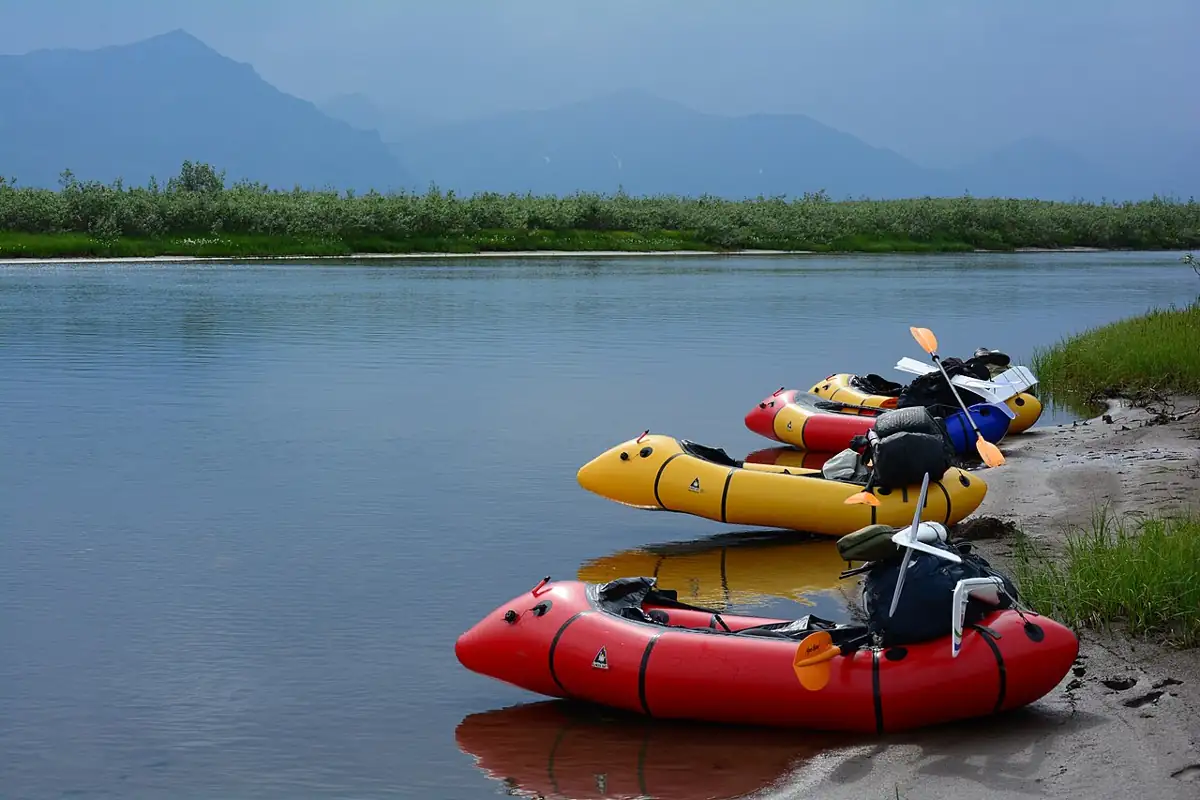
A packraft packs down to roughly the size of a sleeping bag or a small tent. Inflated, it is a one-person boat that floats a paddler and a loaded pack through lakes, flatwater and, in the right design, serious whitewater. Hikers use them to cross rivers that would otherwise end a route, and anglers carry them up to alpine lakes to fish the far shore. Some bikepackers strap the bike across the bow and float the stretch where the trail runs out.
The basic shape is two fat tubes joined at the bow and stern, with a floor stretched between them. Designers add things to that base or strip them away, and every addition costs weight and packed volume.
The main design families
Most boats on the market fit one of a few broad groups. Plenty of models sit between two of them, but the groups are a useful way to sort out what you need.
| Type | Typical use | What it gives up |
|---|---|---|
| Ultralight or lake boat | Flatwater, lake crossings, long hikes | Durability, tracking, whitewater control |
| All-round touring boat | Mixed trips, easy to moderate rivers | Some weight, some whitewater precision |
| Whitewater boat | Class III and up, steep creeks | Weight, packed size, flatwater speed |
| Self-bailer | Splashy rivers, warm water, play | Dryness, warmth, flatwater speed |
| Tandem | Two paddlers, or one paddler with lots of cargo | Packability, solo handling |
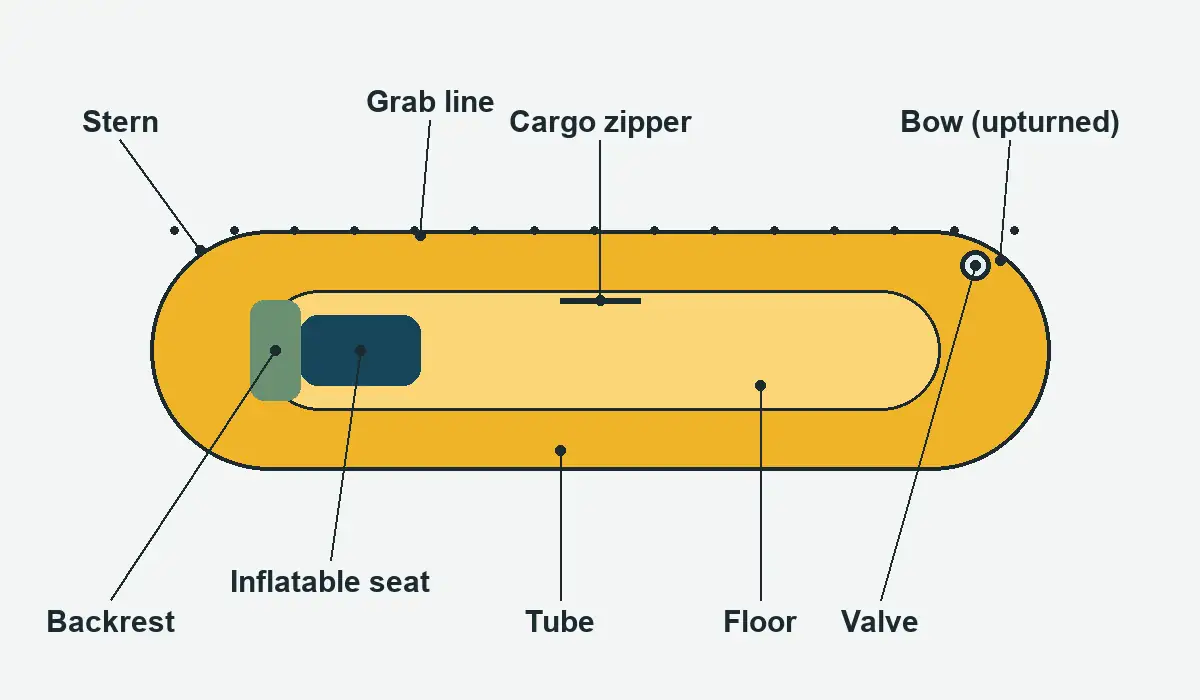
If you are new to the boats, the anatomy page names each part before you get into the trade-offs. After that, the articles on whitewater-specific designs and on the lightest backcountry boats cover the two ends of the range.
Features you will see listed
Spec sheets use a handful of terms worth knowing. A spray deck covers the cockpit and keeps waves out; there are several styles, explained in the spray deck guide. A self-bailing floor lets water drain out through holes in the floor rather than pooling around you; the self-bailing article covers when that is worth having. Airtight zippers in the side tubes let you store gear inside the boat, which lowers the center of gravity; they also add a part that needs care, as the cargo zipper page explains.
Under all of that sits the fabric. Coating type, denier and seam method decide how a boat holds up to sharp rocks and years of rolling and unrolling. The fabrics and construction page explains what those numbers mean.
How to choose a packraft
Answer these in order, and you will usually end up choosing between two or three designs.
- Name the hardest water you expect to paddle in the next year or two. Flat and Class I points to a light or touring boat; regular Class III points to a whitewater design.
- Decide how far you will carry it. Day trips from the car can absorb a heavy boat. A week on foot with a few crossings favors the lightest boat that still handles your water.
- Think about water temperature. Cold rivers and long days in wind favor a deck. Warm, splashy rivers favor a self-bailer or an open cockpit.
- Add up the load: your body weight, your pack, and anything else on the bow such as a bike or fishing gear. Pick a boat whose stated capacity leaves a margin.
- Check fit. Cockpit length and tube size should suit your height, and the packraft sizing guide explains how to judge it.
- Decide on extras last: in-tube storage, a fin, thigh strap points. Each one adds weight and something else to look after.
Quick matches
| If your trips are mostly | Start by looking at |
|---|---|
| Lake crossings on long hikes | An ultralight or light touring boat |
| Mixed rivers up to Class II with camping gear | An all-round touring boat with a cruiser deck |
| Warm desert rivers with lots of splash | A self-bailer |
| Snowmelt rapids, Class III and up | A whitewater boat with outfitting and a sealed skirt |
| Two people sharing one boat | A tandem model |
Fit before features
A boat that does not fit you will paddle badly however good its spec sheet looks. Taller paddlers need longer cockpits, and shorter paddlers in big boats slide around and lose control. Read how to choose a size before you settle on a model, and if you are torn between a packraft and something else entirely, the comparison of packrafts with inflatable kayaks and hardshells lays out where each one makes sense.
Many people start with a second-hand boat, which can be a smart way in if you know what to look for. The used packraft checklist walks through the inspection. Paddling with a partner is covered on the tandem packraft page. Once you have a boat, the packrafting primer covers your first days on the water, and the paddle, life jacket and pump guides cover the rest of the kit.
 01
Anatomy of a packraft
Every part of a packraft named and explained, from the tubes and valves to D-rings, grab lines and fin boxes, plus how each one fails.
 02
What makes a whitewater packraft
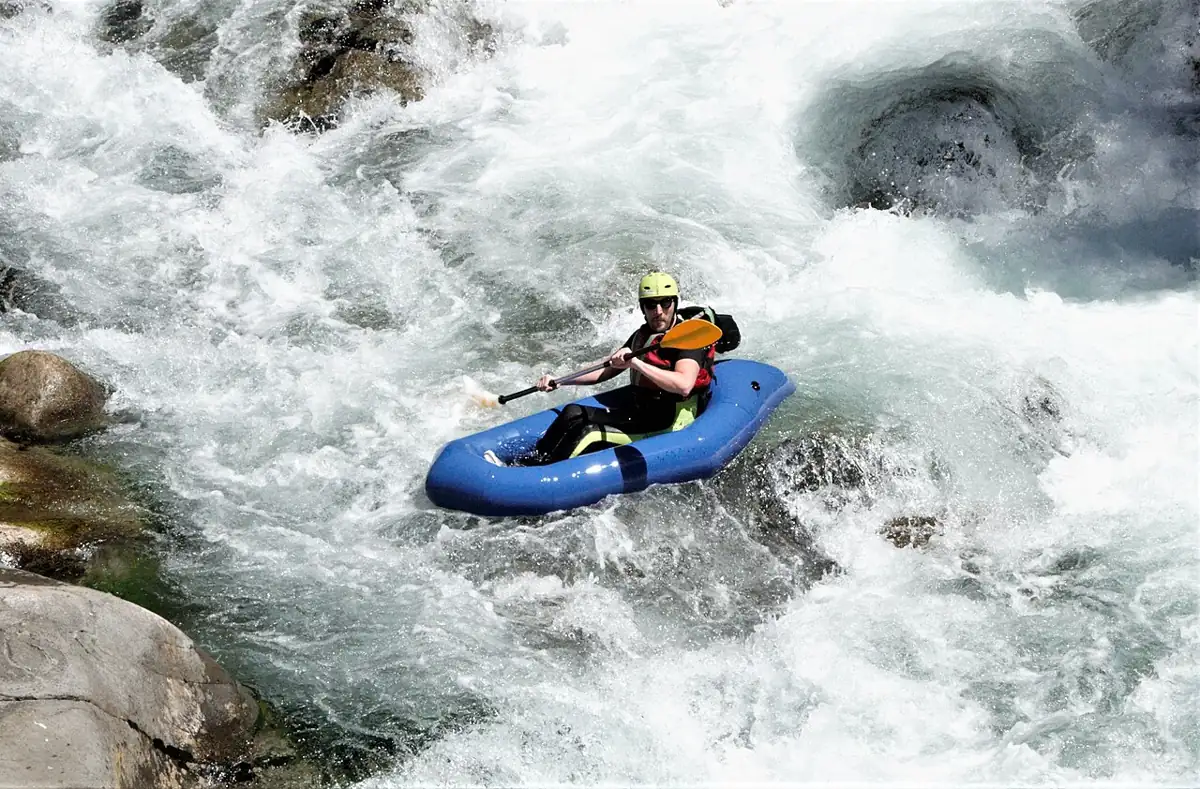
The shape, outfitting and deck features that separate a rapid-ready packraft from a touring or lake boat, with a setup checklist.
 03
Self-bailing packrafts
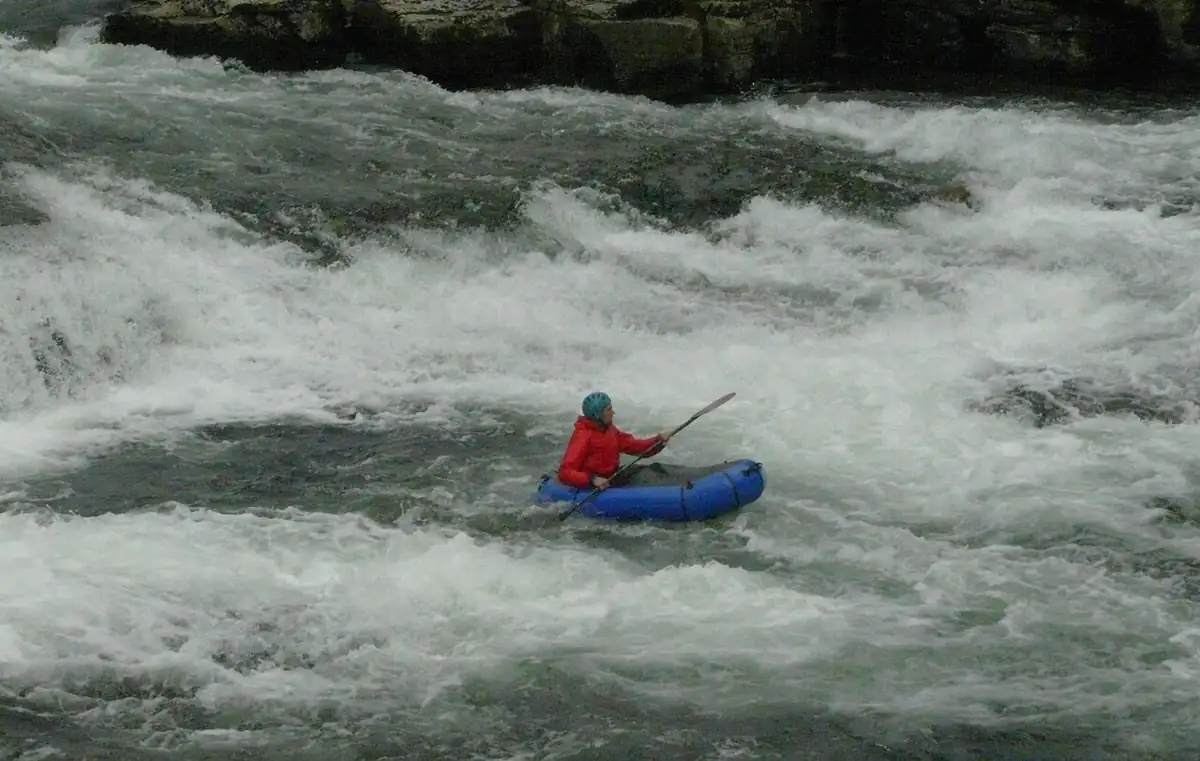
Drain-hole floors explained, with a decked vs self-bailer decision table, floor types and the cold-water trade-offs.
 04
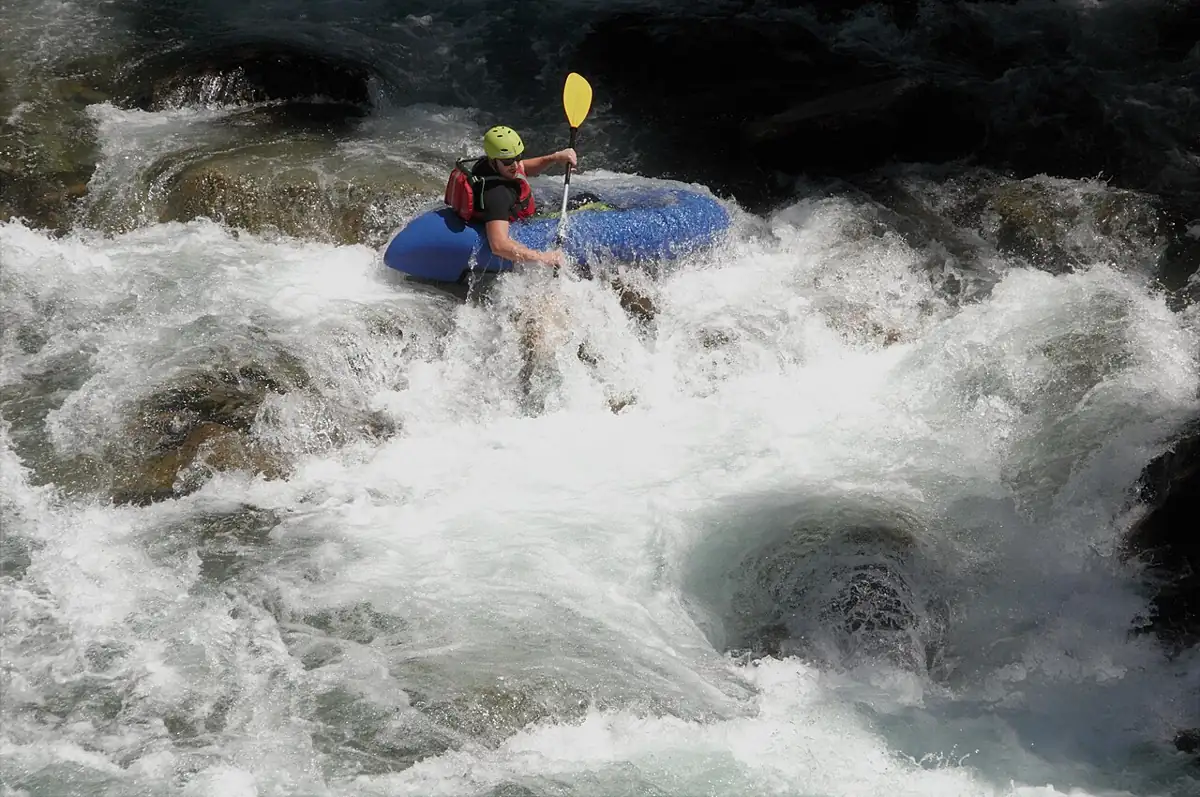
Spray decks and skirts
Cruiser decks, whitewater skirts and open cockpits compared, with attachment styles, fitting steps and a wet exit drill.
 05
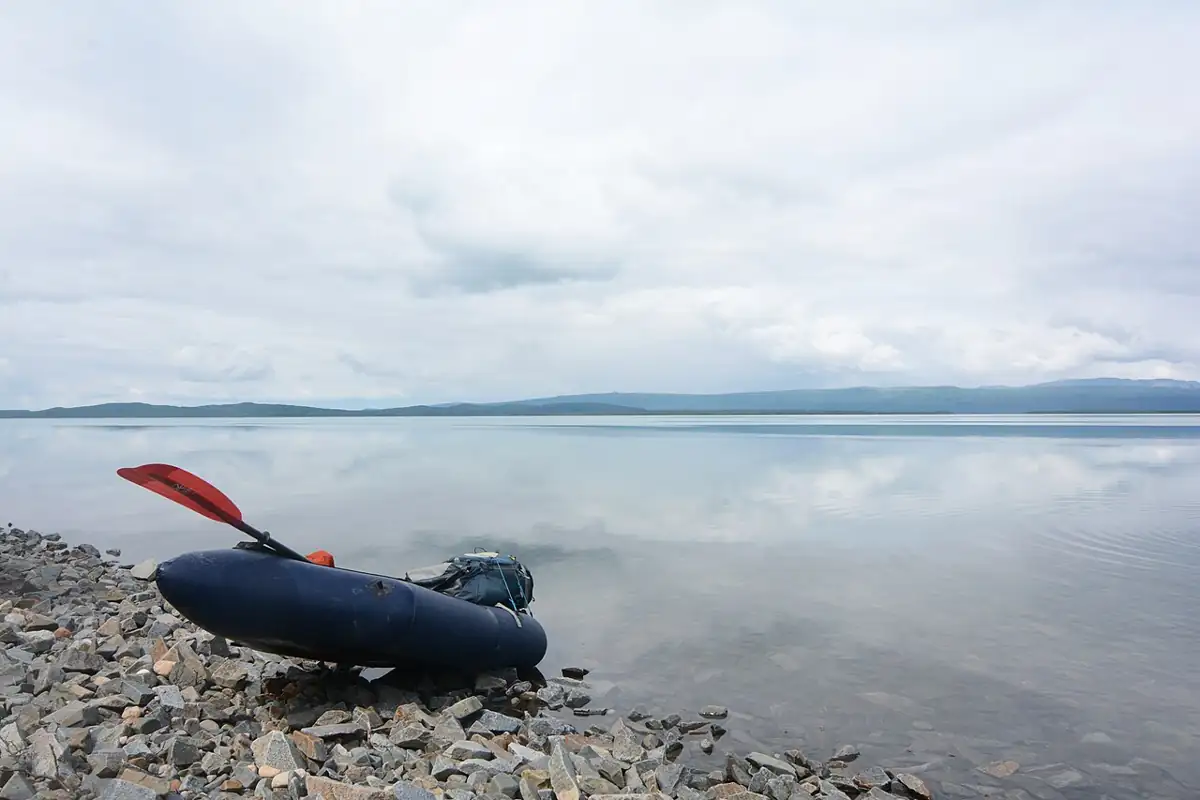
Ultralight and lake packrafts
Minimal packrafts for long hikes and lake crossings, with a weight breakdown and the places a light boat should stay home.
 06
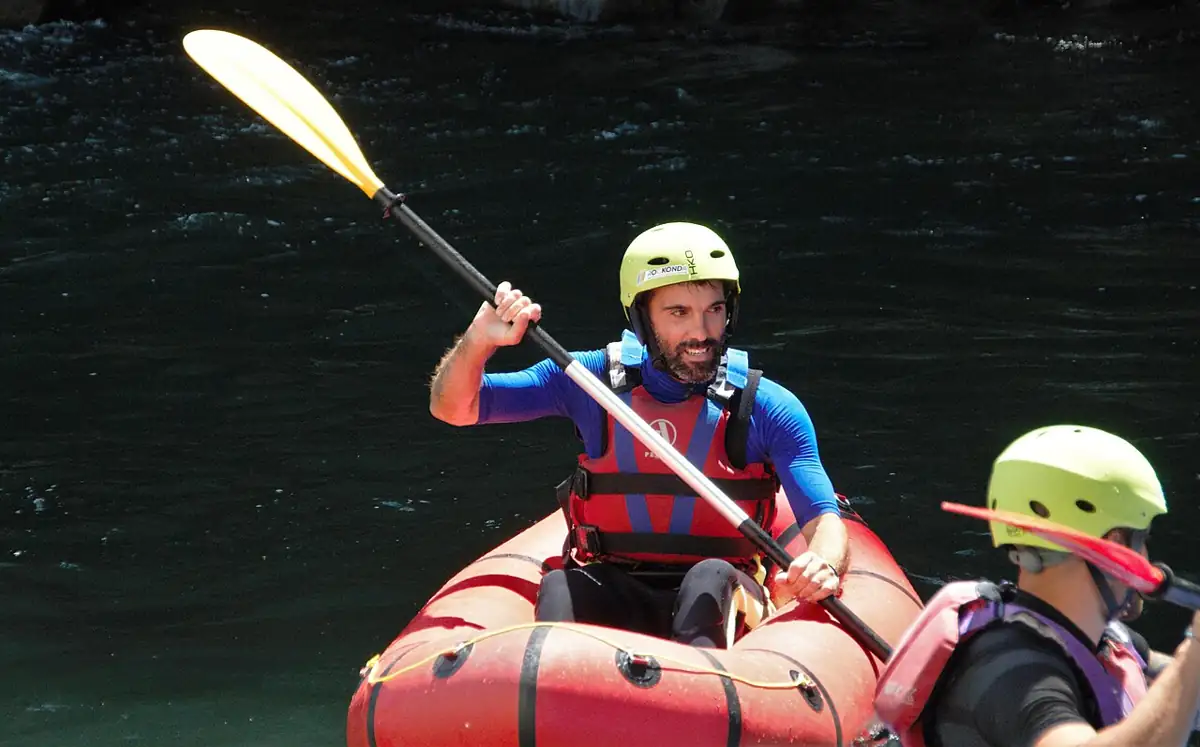
Tandem packrafts
Tandem packrafts in practice: seating and trim, splitting the carry, paddling with a dog or child, and tandem versus two solo boats.
 07
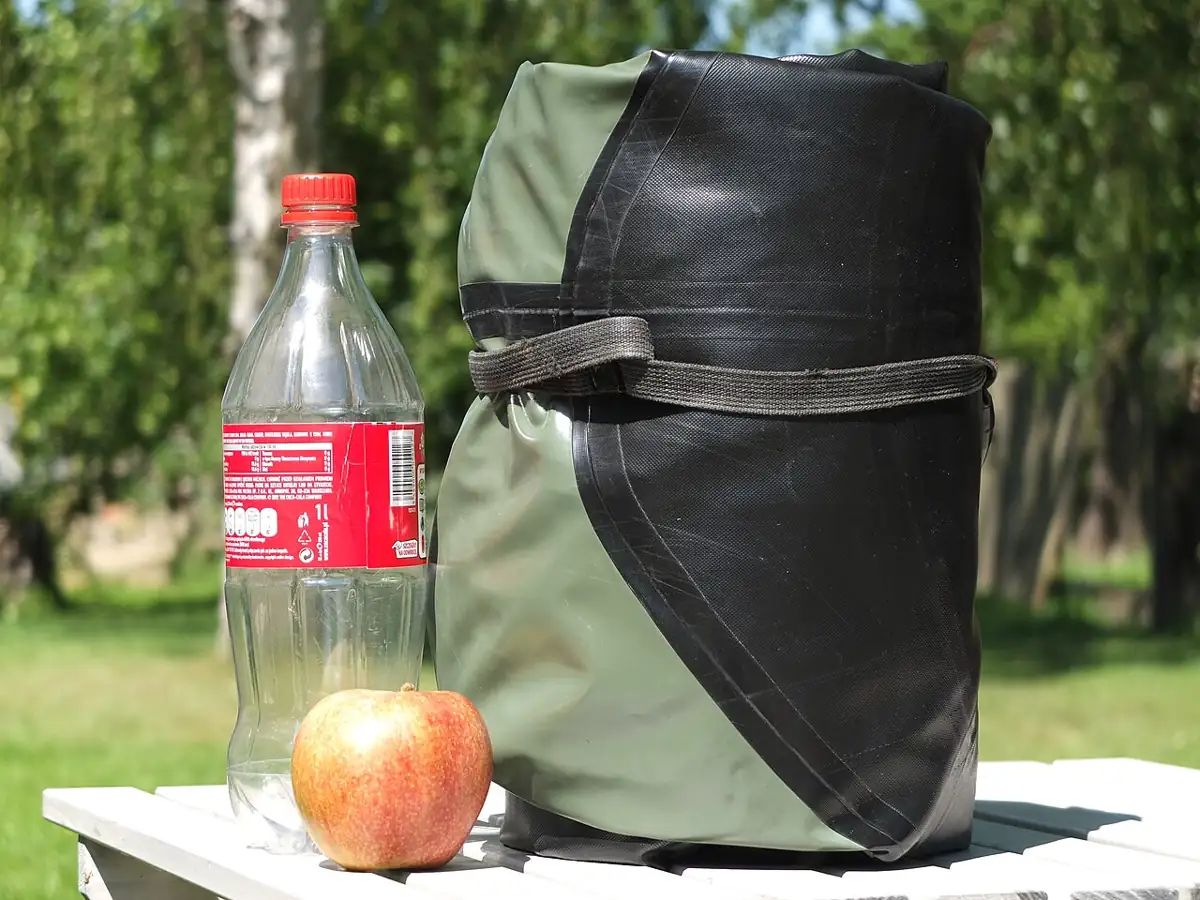
Cargo zippers and in-tube storage
In-tube storage explained: loading the tubes step by step, trimming the boat, caring for the zipper and spotting the usual failures.
 08
Fabrics and construction
Coatings, fabric weights and seam methods explained, with a comparison table and what each choice means on the river.
 09
Choosing a packraft size
Matching cockpit length and capacity to your body and load, with a worked example and fit checks you can run yourself.
 10
Packraft vs inflatable kayak vs hardshell
How packrafts compare with inflatable kayaks and hardshells on carry weight, speed, whitewater and cost, and which paddler each one suits.
 11
Buying a used packraft
An inspection checklist for second-hand packrafts, with a leak test, red flags, seller questions and what to do once the boat is yours.