Boats · decks
Spray decks and skirts
A spray deck keeps waves, rain and wind off your lap. The right one depends on how much water you expect to take and how fast you need to get out.
Last checked November 2026
An open packraft fills up surprisingly fast in waves. A few inches of water in the cockpit makes the boat heavy and tippy, and in cold weather it soaks you through. A spray deck covers the cockpit and stops most of that. It also blocks wind and rain, which counts for a lot on long lake crossings.
Main deck styles
| Style | How it closes | Best for | Watch out for |
|---|---|---|---|
| Open cockpit | Nothing | Warm flatwater, quick hops | Waves, rain, cold |
| Cruiser or touring deck | Cinch or drawcord around the waist | Lakes, easy rivers, rain | Water pooling in big rapids |
| Half deck | Covers the bow area only | Light splash, easy exit | Less protection |
| Whitewater skirt | Neoprene or coated tunnel on a rim, release loop | Class III and up | Must practice exits |
Cruiser decks are the most common. A fabric deck covers the cockpit and you cinch an opening around your waist. Some water still gets in through the opening, though far less than in an open boat.
Whitewater skirts work more like a kayak's. You pull a fitted skirt over a stiff rim or coaming around the cockpit, and a grab loop at the front pops it off. Some systems pair a firm bow deck with a separate skirt you wear the way a kayaker does.
A half deck covers only the front of the cockpit. It keeps the worst splash off your legs and leaves you free to get out in a hurry.
What each style is like to paddle
A cruiser deck changes little about how the boat handles. You can loosen the waist opening on a warm afternoon and cinch it down when the wind picks up. In bigger waves, water lands on the deck and some of it finds the gap at your waist, so you may still need to stop and empty the boat after a long wave train.
A whitewater skirt seals much better, and you pay for that in heat and in the effort of getting out. On a hot day a sealed cockpit gets stuffy, and every time you want out you have to pull the release loop. Paddlers who want to edge and roll with thigh-strapped whitewater outfitting usually need this kind of seal, because a swamped boat will not roll.
A half deck is the compromise for people who mainly want to keep their knees dry. It sheds splash from the bow and leaves the area around your hips open for quick entry and exit. On rainy trips it helps less, since rain lands on your lap anyway.
Attachment methods
The way a deck fixes to the boat affects how well it seals and how much fuss it is on the river.
- A zipper around the tube seals well and stays put. It needs cleaning, though, and can be fiddly with cold hands.
- A hook-and-loop strip around the cockpit is easy to fit and remove, and it can be replaced. It wears over time, and grit cuts its grip.
- Some decks are bonded to the boat. They are lighter and simpler, but you cannot take them off on a hot day.
The part of the tube where the deck mounts is shown in the packraft anatomy guide.
Fitting a deck, step by step
A deck that fits badly is uncomfortable, leaks, and can make an exit harder. Fit it on dry land first, then check it again on the water with your full kit on.
- Inflate the boat to paddling pressure. A soft boat changes shape and the deck will not sit as it will on the river.
- Put the seat and backrest in their paddling positions. Deck fit depends on how high you sit and how far back you lean.
- Attach the deck to the boat, zipper fully closed or hook-and-loop pressed down all the way around, with no wrinkles or gaps at the bow.
- Climb in wearing what you paddle in: life jacket, layers or drysuit. A deck that closes over a T-shirt may not close over a jacket.
- Close the waist opening or seal the skirt. It should be snug without pulling you upright or pressing into your stomach.
- Find the release loop or cinch toggle without looking. Check that it sits on top and falls easily to hand.
- Take a few strong forward strokes and a few sweeps. If the deck rubs your arms or blocks the paddle shaft, adjust seat height or the deck tension.
- Paddle a short distance on calm water, then check for pooled water on the deck and leaks at the bow or waist.
If the deck pulls at the bow, the boat is probably too soft or the seat too high. If it sags and collects water, tighten it or raise the seat a little. Cockpit length matters here too, and the guide to choosing the right boat size explains why paddlers at either end of a model's size range often struggle with deck fit.
Practicing the exit
Any closed deck needs a practiced exit. Do this in warm, calm, waist-deep water with a partner standing next to you, before you ever close a deck in moving water.
- Start with the deck open. Capsize, let go of the boat with your legs, and swim out. This gets you comfortable hanging upside down in the boat.
- Close the deck loosely, without thigh straps. Capsize, tuck forward, find the release loop or toggle, pull it, and push the boat away with your hands on the tubes.
- Repeat with the deck sealed as you would on the river. Keep your paddle in one hand so you learn to release one-handed.
- If you use thigh straps, add them last, and practice until you can get free calmly every time.
- Practice holding the boat and paddle after you surface, and then swimming them to the edge, as covered in the river self-rescue skills.
Cold water makes all of this harder. Your hands lose grip and the shock of going in can make you gasp. Repeat the drill at the start of each season, and once in cooler water while wearing your cold-weather gear, so the release still works with gloves or pogies. The cold-water guide explains why the first minute in the water matters.
Deck or self-bailer?
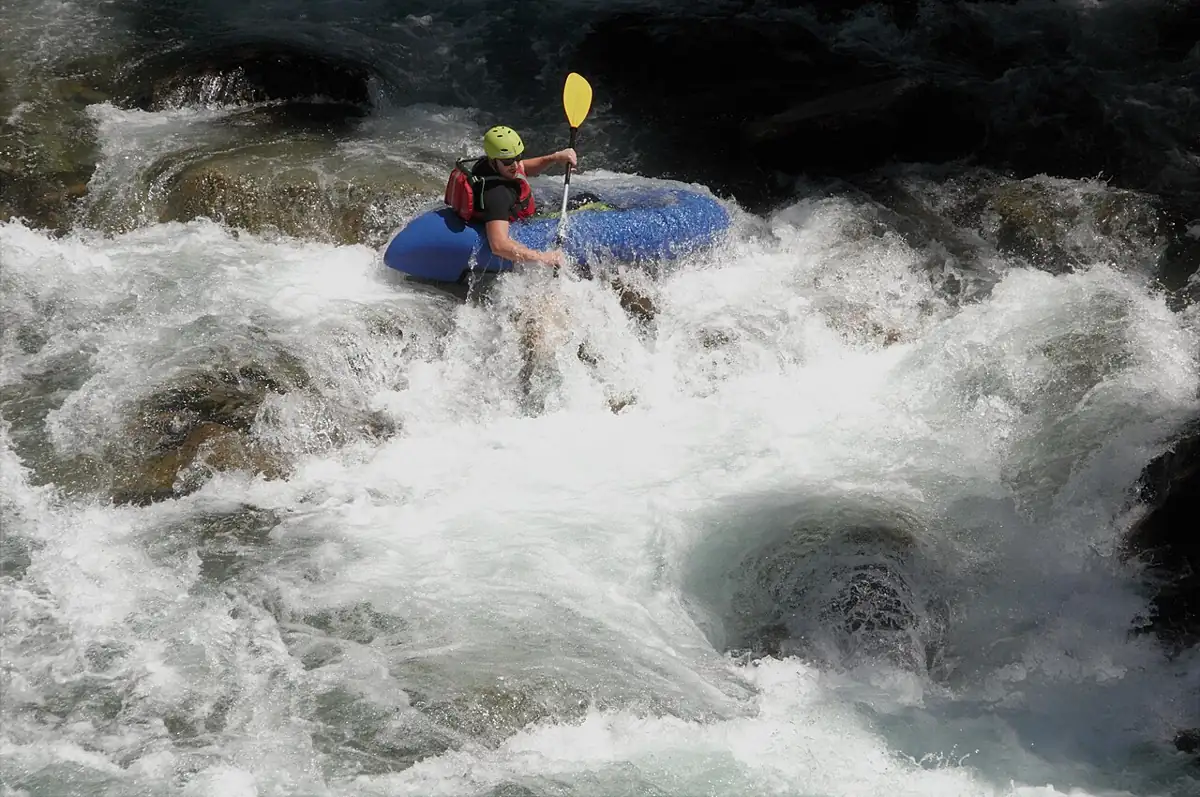
A deck keeps you dry and warm. A self-bailing floor lets water drain instead of keeping it out. For cold water and mixed trips, a deck usually wins. For warm, continuous whitewater, many paddlers prefer to run open with a self-bailer.
Decks for rain and wind
On long flat sections a deck is as much a weather shelter as a wave guard. Rain that lands in an open boat pools under you, and a headwind on a lake chills your legs fast. A cruiser deck with the waist loose lets air move while keeping most rain out. If you expect wet trips, the notes on paddling through rainy days cover clothing and camp habits that go with a closed cockpit.
Common deck problems
| Problem | Likely cause | Fix |
|---|---|---|
| Water pooling on the deck | Deck too loose, or boat soft | Tighten deck, top up the tubes |
| Leaks at the bow | Zipper not fully closed, grit in hook-and-loop | Clean and reseat the attachment |
| Release loop hard to find | Tucked under the skirt, or loop too short | Check it every time you seal up |
| Deck rubs your forearms | Seat too low or deck too high in the middle | Raise seat or adjust deck tension |
| Zipper sticking | Sand and dried silt | Rinse, then use a zipper lubricant made for the purpose |
Fit and care
A deck should be snug around your waist without forcing you to sit bolt upright. If it pulls, check that your seat height and backrest match what the deck was cut for. Rinse grit out of zippers and hook-and-loop after sandy trips, and dry the deck fully before storing it. The general routine in the care and storage guide applies here too.
Weight varies a lot. A light cruiser deck adds a few ounces, while a whitewater skirt with a rim adds noticeably more. Weigh that against how often you will actually close up, and see the overview of packraft designs for where decks fit with other features.
Do I need a spray deck on my packraft?
Not for warm, calm water. For rapids, cold weather, rain or windy lakes, a deck keeps you drier and the boat lighter and more stable.
Is a cruiser deck enough for rapids?
For Class I and II it usually is. In bigger waves water gets in around the waist opening, and harder rapids call for a sealed skirt or a self-bailing boat.
Can I add a spray deck to any packraft?
Only if the boat has an attachment system such as a zipper, hook-and-loop strip or coaming. Check what your model supports before buying a deck.
How do I get out of a spray skirt when I flip?
Lean forward, find the release loop at the front, pull it forward and up, then push the boat away. Practice in calm water until you can do it without thinking.
Does a spray deck make a packraft hotter?
Yes, especially a sealed skirt on a sunny day. Loosen a cruiser deck or open it on warm flat stretches.