Journal · weather
Packrafting in the rain
An 80 percent chance of rain still leaves 20 percent for something better. That was the logic one group used on a trip to the Idaho Panhandle, and it worked out. The same call can go badly on a different river, so the second half of this page covers how to judge it.
Last checked November 2026
Some of the best days on the water start with a forecast that tells you to stay home. One of them happened in north Idaho, and it is worth telling before getting to the harder question of when rain really should cancel a trip, and how to dress, camp and watch the river when it does not.
A wet weekend on the St. Joe
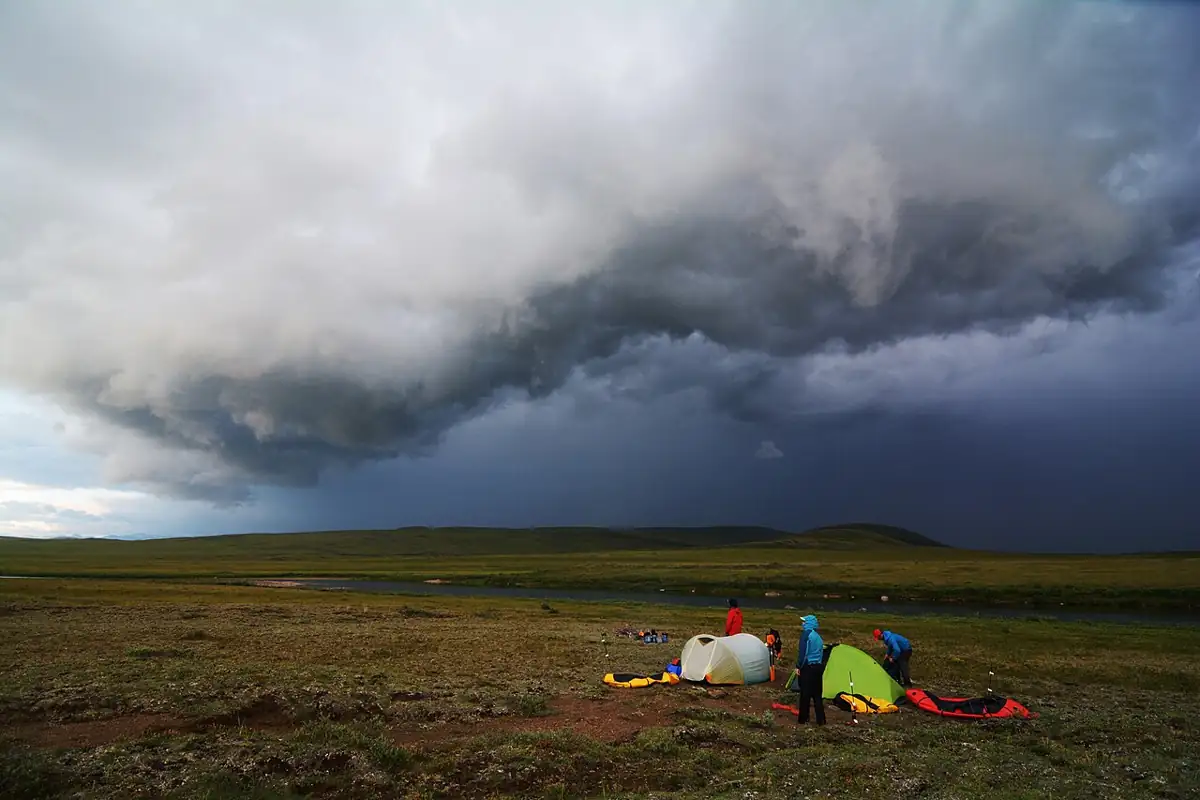
A small group drove north into the Idaho Panhandle on a Friday evening. They planned to camp at the Upper St. Joe River trailhead, hike upriver, fish, and then float back down in packrafts. The forecast called for an 80 percent chance of rain. On the drive they kept checking it and told each other that 80 percent still left a 20 percent chance of something better.
They woke at 3 a.m. to rain drumming on the tent fly. Nobody said much. Everyone understood that the trip was still on.
The rain shells gave up within a couple of hours. Brush overhanging the trail soaked through everything below the waist, and soon they were wet from head to toe, boots full and hands wrinkled. The rain brought fog with it, and the fog moved across the valley in ways a sunny day never shows. Ridges came and went. The meadows below the Bitterroots were overgrown after a long winter and a wet spring.
About six miles in they found shelter under the trees and looked at the river. The rain had pushed the flow up a little, but the water was still clear. Spring runoff had carved new braids through the gravel, and those channels led into deep pools. They spent a while fishing for the westslope cutthroat trout native to the river, a slow game that suits a place with no cell service.
When the clouds started to lift, they rigged the packrafts, checked the tie-downs and put in. A small braided channel led into the main river, and from there the current did the work. Each bend showed something the trail had hidden, and short rapids ran through stretches with no trail at all. They were cold and wet, and none of them wished they had stayed home.
When rain is fine and when it is not
The St. Joe trip worked because a little rain on a large, clear river is mostly a comfort problem. It turns into a safety problem once it changes the river or the ground around it.
| Situation | Usually fine | Rethink the trip |
|---|---|---|
| Flow | Small rise, water still clear | Fast rise, brown water, floating wood |
| Terrain | Open valley, plenty of exits | Slot canyon or narrow gorge |
| Temperature | Mild air, good layers | Near freezing, wind, long days |
| Group | Everyone has dry camp clothes | Anyone already chilled before launch |
| Visibility | Fog lifts by midday | You cannot see the next horizon line |
Questions to answer before you launch
- How much rain is forecast over the whole drainage, not just at the put-in?
- Is the ground already saturated or frozen, so rain runs straight into the river?
- Is there snow in the high country that warm rain could melt?
- How fast has this river risen after past storms? The gauge record will show you.
- What is the hardest rapid at a higher flow, and can you walk around it?
- Where are the exits if you need to get off the water early?
If the answers point toward a big, fast rise, change the plan before you leave home. Pick a different river, shorten the trip or make it a hike. The trip planning routine builds these turnaround rules in from the start.
Rising-river rules
Rivers rarely flood without warning, and from a packraft you sit right at water level where the signs show first.
- Water that was clear turns cloudy or brown.
- Sticks, leaves and foam start floating past in larger amounts.
- Rocks you noticed at the eddy line disappear.
- The river gets louder, and waves build in places that were smooth.
- Eddies shrink, and the edges of the river start moving into the willows.
Set a hard rule before the trip: a gauge number, a landmark rock or a rise you can measure. When you hit it, you get off the water, even if the rapids still look fine. Higher water speeds the current, washes out eddies and turns riverside brush into strainers that can pin a swimmer. A swim that would be easy at normal flow can carry you a long way in high water. Brush up on self-rescue before rain trips, and remember that reading whitewater gets harder when the features keep changing.
Staying warm while wet
You will get wet. The aim is to stay warm while you are. Synthetic or wool base layers keep some warmth when soaked, and cotton does not. A drysuit or dry top keeps out river water, and a rain shell over fleece is fine for hiking. Pack one complete set of dry camp clothes sealed in a dry bag and do not touch it until camp. Eat often, because cold burns through energy fast.
A layering system for wet days
| Layer | On the water | On the trail | At camp |
|---|---|---|---|
| Base | Synthetic or wool top and long johns | Same, or lighter if hiking hard | Fresh dry set |
| Insulation | Fleece under a drysuit | Light fleece, removed when climbing | Puffy jacket, warm hat |
| Shell | Drysuit or dry top with sealed waist | Rain jacket and rain pants | Rain jacket |
| Hands | Neoprene gloves or pogies | Light gloves | Dry gloves |
| Feet | Neoprene socks and drainable shoes | Same, or boots for long approaches | Dry socks, camp shoes |
| Head | Helmet over a thin cap, or a warm hat on flat water | Cap and hood | Warm hat |
The details are in the guide to drysuits and layering. Neoprene socks under drainable shoes keep feet warm when they will be wet all day anyway, and the footwear page compares options. Keep the camp set and sleeping bag in separate, well-closed dry bags, ideally doubled, because a wet sleeping bag on a cold night is a real emergency.
Spotting hypothermia early
On the water, watch your group for early signs of cold, like a talker going quiet or fingers fumbling a buckle. The cold water safety page explains how to spot hypothermia and what to do about it. Rising water also means checking the gauge before you launch, so the notes on river flows and gauges apply on rainy weekends too.
Wilderness medicine courses often teach the early signs as "the umbles": someone who stumbles, mumbles, fumbles with zips and buckles, or grumbles more than usual. Uncontrollable shivering is another early sign. People rarely notice these changes in themselves, so check on each other at every stop.
| Stage | What you may see | What to do |
|---|---|---|
| Early | Shivering, clumsy hands, quiet or irritable mood | Stop, add dry layers, eat and drink something warm and sweet, keep moving gently |
| Worsening | Stumbling, slurred speech, poor decisions | Get off the water, set up shelter, replace wet clothing, insulate from the ground, share body heat |
| Severe | Shivering stops, confusion, drowsiness | Handle gently, keep the person flat and insulated, call for evacuation |
Stopping early costs an hour. If you wait until someone cannot zip their jacket, you are treating a patient in the rain.
Choosing a camp in wet weather
- Camp well above the high-water line. Look for drift lines of sticks and debris on the bank, and pitch above them.
- Avoid low gravel bars and islands. They are the first ground to go under.
- Keep out of dry washes and side drainages, which can run with little warning.
- Check overhead for dead branches and leaning trees, since wet, windy nights bring them down.
- Pull the boats well up and tie them to something solid. A packraft left on a bar can be gone by morning.
- Rig a tarp for cooking and changing so the tent stays dry inside.
- Pick a spot with a walk-out route in case the river is too high to paddle the next day.
After the trip
Dry everything as soon as you get home. Open the boat's valves and any cargo zipper, and let the inside of the tubes air out. Damp gear left rolled in a bag smells within days and can grow mildew. Rinse off mud and plant bits so you do not carry them to the next river.
The St. Joe group also came for the trout, and rainy days can be good fishing. Packraft fishing has more on combining the two. Other stories are collected on the Journal hub.
Is it safe to packraft in the rain?
Light rain on a stable river with good layers is usually fine. The danger comes when rain raises the river fast, brings flash floods into canyons or chills a group that is not dressed for it.
What should I wear for packrafting in the rain?
Synthetic or wool base layers, fleece insulation, and a drysuit or dry top on the water, with neoprene on hands and feet. Keep a full set of dry camp clothes sealed away until camp.
How do I know if a river is rising?
Watch for color changes, more floating debris, rocks disappearing and eddies shrinking. Check the gauge before you launch and mark the waterline at camp.
What should I do about lightning on the water?
Get off the water and away from tall, isolated trees and open bars at the first thunder. Wait until the storm has clearly passed before launching again.
What are the first signs of hypothermia?
Shivering, clumsy hands, stumbling, slurred speech and changes in mood. Act early by stopping, adding dry layers and eating, rather than pushing on.