Journal · hunting
Packrafts on hunting trips
On a fly-in hunt every pound counts, and the ground between the kill and the pickup is often the hardest part. One hunting pair found that a packraft changed the whole trip.
Last checked November 2026
Plenty of hunts happen in roadless country. There, a boat that rides in a pack can get you across a lake or to the far bank of a river, or let you move a heavy load over water instead of through brush. Moving heavy loads is the job that needs the most care.
A moose hunt near Tok
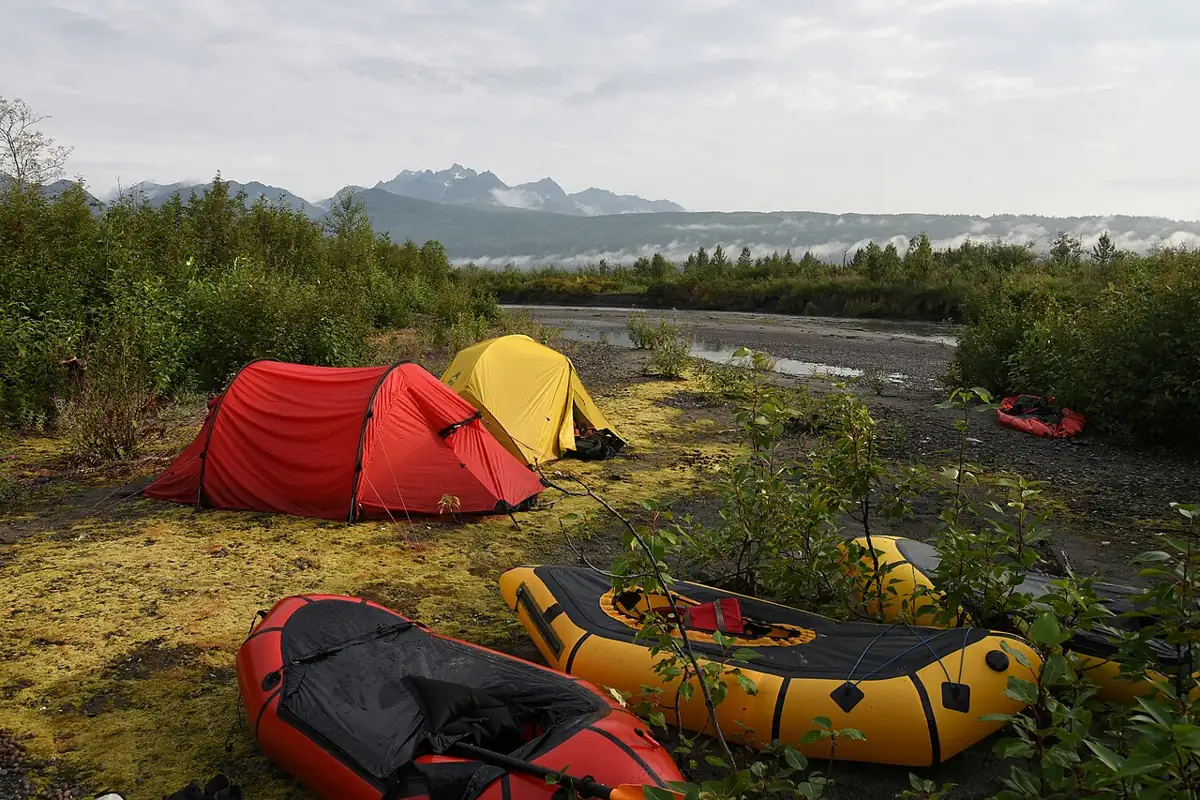
Two friends planned a September moose hunt from a small unnamed lake near Tok, in interior Alaska. For one of them it was a first visit to Alaska and a first moose hunt. A bush plane on floats flew them in. The plane could only take about 50 pounds of gear and food per person, so they packed as carefully as for any backpacking trip. They wanted a boat for the lake, and a packraft was the only one that fit the weight allowance.
From the air they had seen game trails everywhere. On the first evening a young bull and a cow with a calf showed up, and after dark they heard bulls grunting and raking brush. At dawn the next morning a bull came along the far shore. The hunters moved to a better spot and called, raking brush with a paddle to sound like a rival. He came close enough for a clean shot.
Butchering took about five and a half hours and filled fourteen game bags. The pickup spot was across the lake. Going around would have meant carrying several hundred pounds of meat plus antlers about two miles through wet, lumpy muskeg and thick brush. One hunter said later that he would not have taken the shot without the boat.
Instead he paddled his partner across to the pickup point, then made trip after trip, three loads of meat and then the antlers and remaining gear. Meanwhile his partner called the air service on a satellite phone. They were back in town by sundown. A hunt planned for eight days had taken about twenty-four hours.
What a packraft is good for on a hunt
Most hunting trips ask less of the boat than the moose hunt did. Decide which job you want it for first, because that decides which boat you carry.
- Access: crossing a lake or a river that cuts you off from the country you want to hunt. A light boat is enough, and you may only use it twice.
- Glassing and stalking along water. Drifting a slow river edge quietly can put you in front of animals that would hear you walking. Check whether your state allows hunting from a boat at all, and under what conditions, before you plan around it.
- Camp moves. Floating camp downstream between hunting areas saves days of carrying on a long river hunt.
- Meat and antler hauling, the heaviest and riskiest use, covered below.
If you mostly want access and camp moves, a lighter boat with a big cargo area works. If you plan to haul meat, a sturdier boat with a long stern, plenty of tie-down points and tougher fabric is the better bet. The pages on inner-tube cargo storage and fabric weights and welded seams explain what those features do.
Load limits and ferry trips
It went smoothly because the lake was calm and the hunter split the meat into several small loads. Overloading is the main way hunting trips with packrafts go wrong.
Reading a load rating
Makers publish a maximum load, and it covers you, your gear and anything else in the boat. That number describes how much the tubes can float before the boat is dangerously low. It says nothing about how the boat handles. A packraft near its rating sits deep, turns slowly, takes waves over the side and tires you out within a few hundred yards of headwind. Treat roughly half to two thirds of the rating as the realistic working range on flat water, and less on moving water. If you cannot find a rating for your boat, ask the maker before the trip rather than guessing.
A worked load plan
Here is a hypothetical, to show the arithmetic. Say your boat's published maximum load is 300 pounds, you weigh 190 pounds dressed with a life jacket, and the paddle and a small safety bag add another 10.
- That leaves 100 pounds before you even reach the rating. On flat water you would want to stay well short of that ceiling.
- Plan cargo trips of about 50 to 60 pounds each. That is roughly two or three full game bags, depending on how you cut and bag the meat.
- If the meat in game bags totals several hundred pounds, that is five, six or more crossings, plus one for antlers and one for camp.
- Time one empty round trip first. If a crossing takes 20 minutes each way, seven loaded trips is most of a day of paddling, and wind can stop you at any point.
- Decide in advance what wind or wave height ends the day. When it arrives, the meat stays on the bank, covered and shaded, and you wait.
Run the same numbers with your own boat, body weight and distances before you fly in. If they do not work, you need a second boat, a two-person raft for the haul, or a different pickup point. The trade-offs of a larger tandem packraft are worth reading if you hunt with a partner.
Meat care on the water
Moving meat by boat puts it near water, and wet meat spoils faster. A few habits keep it clean and cool.
- Let quarters and boned meat cool and form a dry crust on a rack or brush pile in the shade before you bag them for the boat.
- Use breathable game bags, then put each bag inside a roomy dry bag or heavy liner for the crossing only, so splash and bilge water cannot reach it.
- Take meat out of the waterproof bags as soon as it reaches the far shore. Sealed meat warms up quickly in the sun.
- Never let meat ride in the floor of the boat, where water collects. Stack it on the tubes or in a raised, lashed load.
- Keep a clean tarp at the landing spot so the meat goes from boat to tarp, not into mud and sand.
- Keep meat caches well away from camp and the landing, and in bear country follow the local rules for storing food and game.
The dry bag guide covers sizes and closures if you need liners large enough for quarters.
Lake versus river
| Factor | Lake ferry | River float with meat |
|---|---|---|
| Control | Good in calm weather | Limited, boat is heavy and slow to turn |
| Main hazard | Wind and waves | Sweepers, logjams, rocks |
| Best approach | Several short trips | Scout everything, consider portaging |
| Rescue options | Partner on shore, short swim | Fast water, swims carry you away |
On a river, a loaded packraft is much harder to move than an empty one. Ferry angles that work with a day pack will not work with a quarter of a moose on the bow. If you plan to float meat out, choose easy water, scout it beforehand and keep the loads light. If you are new to paddling with weight, the packrafting 101 primer and a day of practice with a loaded boat are worth the time.
State rules to check before you go
Hunting regulations, seasons and tag requirements are set by state wildlife agencies and sometimes by federal land managers, and they differ in ways that affect how you use a boat. Treat the points below as things to look up for your state and unit.
- Salvage rules. Many states say which parts of an animal you must pack out. Alaska, for example, requires edible meat to be salvaged, and in some game management units rib meat or quarters must stay naturally attached to the bone, which makes the load heavier and bulkier. Read the rules for your exact unit.
- Evidence of sex and antlers. Some hunts require you to carry evidence of sex or antlers out with the meat, sometimes in a set order. Plan loads so you do not leave required parts for last if weather could strand them.
- Hunting from a boat. Some states restrict shooting from a boat, or from a boat under power, or limit it to certain species. Do not assume that because you can paddle there, you can hunt from the water.
- Land status. Rivers often cross federal, state, tribal and private land within a few miles. Know whose land the bank belongs to before you land or butcher.
- Transport and tags. Tagging, sealing and transport rules decide when and how meat can leave the field. Your air service will often know the local habits, but the agency rules are what count.
Check all of this with the state agency well before you book a flight, and read the current year's regulations rather than last season's.
Planning a hunting trip with a packraft
Ask the air service where it can safely land and pick up, and agree on a pickup date and a backup plan. Leave a trip plan with someone at home. The general routine in planning a packraft trip applies here, with the extra step of planning where the meat goes.
For hunting, pick a durable, roomy boat over the lightest one you can find. Tie-down points and cargo storage help. Carry a repair kit, because broken bone and antler tines are hard on fabric. Pad tines with spare clothing or foam before they go anywhere near a tube, and know the field patching steps in the packraft repair guide before the season opens.
Clothing and safety gear
Fall hunts in the north mean cold water, and a loaded boat that flips is hard to right. Wear a properly fitted paddling life jacket on every crossing, even short ones, and dress for a swim in water that may be close to freezing. The page on cold water and immersion explains what happens to the body in the first minutes. Carry a satellite messenger or phone on your body, not in the boat.
Modern packrafting grew up in Alaska, and the Alaska trip page covers paddling there more broadly. Anglers will find related advice in packraft fishing, and the Journal holds the rest of the stories.
Can a packraft really carry a moose?
Not in one load. It can move the meat in several trips across calm water, as the hunters near Tok did, but the boat's load rating and handling set the size of each trip.
Is a solo or tandem packraft better for hunting?
A solo boat is lighter to fly in and carry. A tandem carries more per trip and suits pairs who expect a big animal, at the cost of weight and slower turning.
Should I float meat down a river or carry it?
Only float it on water you have already run empty and know well. On unfamiliar rivers with logjams or rapids, carrying or flying the meat out is usually the safer choice.
How do I keep meat dry in the boat?
Bag it in breathable game bags, then put those in waterproof liners for the crossing only. Unseal them on shore so the meat does not warm up.
Do I need special permission to use a boat while hunting?
Using a boat for travel is usually fine, but rules on hunting from a boat, salvage and transport vary by state and unit. Check the current regulations with the state wildlife agency.