Journal · canyons
Packrafting and canyoneering
A slot canyon that ends at a river is a route without an easy exit, unless you carry a boat. Packrafts have opened some striking desert descents.
Last checked November 2026
Canyoneering and packrafting suit each other well. Many technical canyons end at a large river, and the hard part is getting out, because climbing back up is slow and the banks downstream may be cliffs. A packraft folded into the pack turns the river into the exit, at the price of extra weight and one more thing to protect in a narrow slot.
Waterholes Canyon to Lees Ferry
Waterholes Canyon cuts through Navajo Sandstone south of Page, Arizona, just south of Horseshoe Bend. The section west of the US-89 bridge is a technical canyoneering route of about four miles that drops roughly 1,500 feet to the Colorado River. From there, a flatwater float of about four miles through Glen Canyon National Recreation Area leads to Lees Ferry.
One paddler went through twice, a few years apart, and found the canyon noticeably changed the second time. Flash floods had moved debris, scoured new potholes and altered drops. The descent includes about ten or more rappels, many 30 to 50 feet, plus tight squeezes, cold debris-filled pools and a final big drop of over 300 feet. That drop is usually split into shorter rappels because a crack at the top is known for trapping ropes. A packraft wrapped in a protective bag survives the slots better than one carried bare.
The water at the bottom comes from the bottom of Glen Canyon Dam and is clear, green and cold. Sandstone walls rise around you and turn orange in late light. With a headwind the float can take hours, so start early.
The land on the canyon side belongs to the Navajo Nation, which requires its own permit for the canyon. The take-out is inside a national recreation area run by the National Park Service. The Glen Canyon and Lees Ferry page covers the river section.
Side canyons of the Grand Canyon
A private group on a 25-day Colorado River trip through the Grand Canyon in early spring brought two packrafts with spray decks and thigh straps. Besides running main-river rapids, the packrafts became shuttle boats. They ferried people to the mouths of side canyons for canyoneering routes, waited overnight and picked people up the next day. After one descent the group eddy-hopped upstream in the dark for about two miles back to camp.
The boats also opened up tributaries. Tapeats Creek drops steeply in its lower mile through a narrow, high-walled slot, and the group ran it with experienced class IV paddlers. On Havasu Creek, with its blue-green water, the packrafts ferried people up the lower narrows, then ran several travertine drops on the way back down. Both boats finished the trip without a puncture despite rocky side streams.
A Grand Canyon river trip needs a permit from the National Park Service, and side-canyon rules vary. Some areas have special restrictions. The Grand Canyon trip page explains the permit system.
A creek in Tasmania
A group of friends in Tasmania took several packrafts into Leven Canyon, the deep gorge of the Leven River in the island's northwest, and filmed the run. Steep wet gorges like that one work the same way as desert slots when the river is the only practical route out.
Permits and land managers
Canyon routes often cross more than one jurisdiction in a few miles, and each can have its own rules. Waterholes is a good example: tribal land in the canyon, a national recreation area at the river. Before any combined trip, work out who manages the canyon, the river and the take-out.
National parks with popular technical canyons usually require a permit for them. In Zion, the National Park Service requires a wilderness permit for every canyon that needs ropes or descending gear, and it limits group sizes and daily numbers through a lottery and reservation system. The Zion canyoneering page on nps.gov lists the current rules and how to apply. Other parks, BLM field offices and national forests take different approaches, from no permit at all to seasonal limits, so check each one directly.
Flash flood rules
Slot canyons drain large areas through narrow cracks. Rain falling miles away, out of sight above the rim, can send a flood through a slot under a blue sky. On a combined trip it is easy to watch the river forecast and forget the side drainage you are about to enter, which is where the flood risk sits.
- Check the National Weather Service forecast for the whole drainage, not just the trailhead, and read any flash flood information the park or field office posts.
- Monsoon season in the Southwest, typically mid to late summer, brings afternoon thunderstorms. Many canyoneers avoid committing slots then, or finish by midday.
- Know your escape points before you start. In a long narrow section there may be none, which is the reason to stay out when the forecast is doubtful.
- Watch for signs on the way in: rising water, a change in color, floating debris, a roar from upstream. Get to high ground at once and stay there.
- Floodwater carries logs, rocks and mud. Never try to outswim or out-paddle a flood in a slot or at a canyon mouth.
- Flood debris can change the canyon between trips. Old beta about rappels and potholes may be wrong.
Rain at the river end matters too. Side streams can push a muddy surge into the main river and swamp a beach camp. The notes in packrafting in the rain cover river-side planning.
Potholes and how people get out of them
Potholes are bowls scoured into the canyon floor. Full of water, they are cold swims. Half full, the lip may be too high and smooth to climb from the water, and a "keeper" pothole can trap a tired person. These are the methods canyoneers learn to deal with them. Practice them with an instructor before relying on any.
- Partner assist: one person climbs onto another's shoulders, or a partner on the far lip pulls with a hand line.
- Pack toss: a heavy pack tied to a rope is thrown over the far lip to act as an anchor for a climb out. A boat bag full of gear works the same way.
- Hooks and aid: specialized hooks catch the lip and let you step out on slings.
- Sand bags or pothole escape bags: filled with sand on the far side, they become a counterweight anchor.
- Floating help: a partly inflated packraft can give a swimmer something to rest on in deep cold water, but it will not lift anyone out.
Water level changes the problem from trip to trip. A pothole that was an easy wade one season can be a keeper the next.
Rope and boat: combining the kits
You need enough rope gear for the canyon and enough boat for the river, in a pack that still fits through the squeezes. Groups usually settle on one of three setups.
| Approach | Boat | Rope gear | Suits |
|---|---|---|---|
| Light combo | Light flatwater packraft, carbon paddle | One rope sized for the longest drop, plus pull cord | Short canyons ending at flat water, such as Waterholes |
| Whitewater combo | Decked whitewater packraft | Full canyon kit | Canyons ending at rapids, with strong paddlers |
| Shuttle boat | Packraft stays at the river | Full canyon kit for the descent team | River trips using a boat to reach canyon mouths |
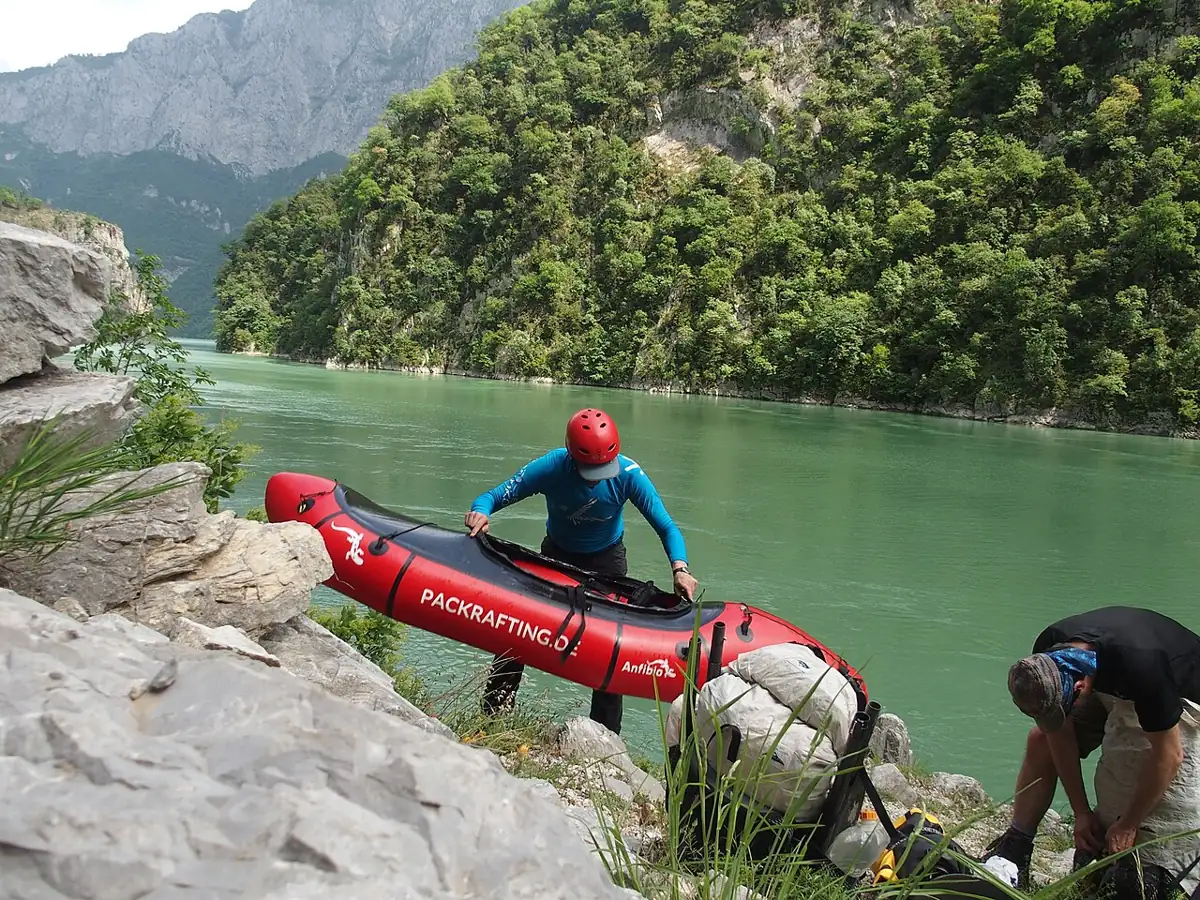
The boat rides inside a tough haul bag or wrapped in a sleeping pad for the slot section. Inflation bags double as dry bags, and a spray deck can be left behind on flat water to save weight. A boat with gear stowed inside the tubes keeps the load low for the float, and the lighter backcountry hulls save weight where the river is calm. Pack the dry bags for both swimming potholes and floating the river.
Gear that crosses over
| Item | Canyon role | River role |
|---|---|---|
| Helmet | Rockfall and tight squeezes | Rapids and swims |
| Wetsuit or drysuit | Cold pools | Cold river water |
| Dry bags | Swimming potholes | Keeping camp gear dry |
| Rope bag or haul bag | Protects the folded boat | Holds the throw rope |
A helmet is the easiest crossover item. Ropes, harnesses and anchor gear are beyond this guide. Learn them from a qualified instructor before you combine the two sports. On the paddling side, a guided course or clinic covers river rescue, and the pages on self-rescue after a flip and repairing a hole in the field are worth reading before a slot that ends in a long float.
For more ways to combine a boat with other sports, see what you can do with a packraft, or return to the Journal.
Do I need a permit to canyoneer and packraft?
Often, and sometimes two. Zion requires a wilderness permit for technical canyons, river corridors may need their own permit, and tribal lands set their own rules.
How do I protect a packraft in a slot canyon?
Pack it inside a tough haul bag or wrapped in foam, and keep it deflated and rolled until you reach the river.
When is flash flood season in the Southwest?
The summer monsoon usually brings the highest risk, but floods can happen whenever rain falls in the drainage. Check forecasts for the whole watershed.
Can a packraft help me get out of a pothole?
It can give a swimmer something to rest on, but it will not lift you over the lip. Pothole escapes need partner, rope or anchor techniques.
What experience do I need for a trip like Waterholes Canyon?
Solid rappelling and rope retrieval skills, pothole escape practice, and enough paddling to cross cold flat water in wind.