Trip notes · Queensland
Tully River rafting and packrafting
Hydro releases keep the Tully Gorge running on most days of the year, which makes it Australia's best-known white water. Warm water, rainforest and grade 3 to 4 rapids.
Last checked November 2026
The Tully River is the best-known whitewater river in Australia. It runs from the Atherton Tablelands down through the Tully Gorge to the coast near Tully and Mission Beach, between Cairns and Townsville. The upper river is part of a hydro-electric scheme, and water released from Koombooloomba Dam through the Kareeya power station keeps the gorge running on most days of the year. That reliability is why commercial Tully River rafting trips can run almost every day, and why so many Australians have their first white water day here.
The gorge sits in Tully Gorge National Park, part of the Wet Tropics World Heritage Area. The rainforest comes right down to the water, and the town of Tully is known as one of the wettest places in Australia.
The rafted section
Commercial trips launch below the Kareeya power station and run downstream through the gorge for most of a day, with dozens of rapids along the way. The road along the gorge gives access to the put-in, picnic areas and lookouts. Rapids come one after another in a pool-drop pattern with short calm stretches in between.
| Part | What to expect |
|---|---|
| Below Kareeya power station | Launch area and warm-up rapids on released water |
| Upper and middle gorge | The bulk of the grade 3 rapids, with a few grade 4 drops that commercial trips run or walk depending on level |
| Lower gorge | Easier rapids and longer flat stretches towards the take-out |
| Below the gorge to the coast | Flat, slow, warm water in cane country; crocodile habitat; not a packraft river |
Grade
At release flows the Tully Gorge is mostly grade 3 with some grade 4. It is technical, rocky water with drops, holes and fast boulder gardens. With a guide and a big raft most fit people manage it. In a packraft or kayak it is a proper grade 3 to 4 run that needs a reliable roll or confident re-entry, good boat control and solid rescue skills. Heavy rain on top of a release lifts the grade further. See river difficulty grades.
Season, releases and the wet
Rafting on the Tully runs year-round on hydro releases, with trips on most days. Release days and times are set by the power station operator and can change, so check with an operator or the land manager before you plan a private trip around a particular date.
| Season | Conditions |
|---|---|
| Dry season (about May to October) | Mild days, cooler nights, settled weather and the most reliable conditions |
| Build-up (about October to December) | Hot and humid; storms in the afternoons |
| Wet season (about December to April) | Heavy rain and cyclone risk; the river can flood well above release levels and trips may be cancelled |
In the wet, watch Bureau of Meteorology flood warnings for the Tully catchment and the tropical cyclone outlook. Roads into the gorge can be cut by floodwater, and the Bruce Highway around Tully sometimes closes after heavy rain.
Access, parks and permits
The gorge is in Tully Gorge National Park, managed by Queensland Parks and Wildlife Service (QPWS). There is no general paddling permit for a private day trip, but parks rules apply to camping, vehicles and commercial activity. Some of the access roads and the power station area are controlled by the hydro operator. Check current access arrangements and any closures with QPWS before you go, and respect gates and signs around the power station.
Commercial operators hold permits to run trips in the gorge. A guided trip is the simplest way in for most people and takes care of transport from Cairns or Mission Beach, gear and safety cover.
Safety: heat, crocodiles and rain
- Crocodiles: saltwater crocodiles live in the lower Tully and its estuary and can travel well upstream. Follow every Crocwise sign, never swim or camp at the water's edge in the lower river, and ask locals about recent sightings.
- Heat and sun: wear a sun shirt, a hat under the helmet where possible, and carry plenty of water. Heat exhaustion is a real risk in the build-up.
- Rocks and holes: the gorge is technical. Swim on your back, feet up and downstream, and get to an eddy quickly.
- Wear an AS 4758 PFD and a helmet. Carry a throw bag, a first-aid kit and a knife.
- Snakes and stinging trees grow in the rainforest. Stay on tracks and keep hands off unfamiliar plants.
Logistics
Most visitors base themselves in Mission Beach or Tully. Cairns is about two and a half hours north and has the nearest major airport. Townsville is about three hours south. Commercial trips include pickups from these towns. Private paddlers need their own vehicle and a shuttle along the gorge road; plan to be off the road before dark, as wildlife including cassowaries crosses it.
Packraft notes
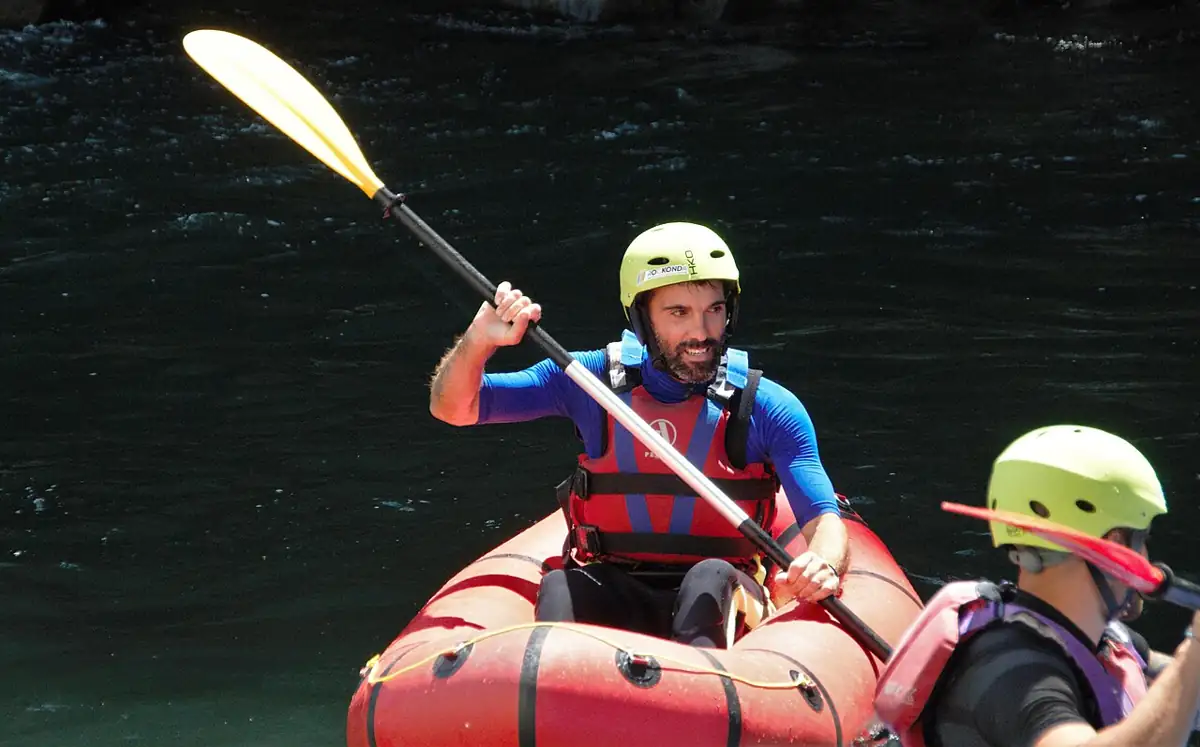
- Use a whitewater packraft with thigh straps, a backband and a spray deck or self-bailing floor. The Tully is not a place for a light open boat.
- Water is warm by Australian standards, so a thin wetsuit top or a sun shirt and boardshorts is enough in the dry season, and overheating is more likely than getting cold.
- Carry the boat on short portages around any drop you do not like. The banks are rocky and slippery, so wear good river shoes.
- Paddle with people who know the river. Commercial rafts use the same water, so give them room on the main lines.
- Rinse and dry gear after every trip; tropical humidity breaks down glue and fabric faster than you think. See care and storage.
For a gentler tropical river close to Cairns, see the Barron River. The Queensland trip notes compare both, and the trips overview covers the rest of Australia.
Tully River questions
Why can you raft the Tully River almost every day?
The upper Tully below Koombooloomba Dam is used for hydro-electric power, and water released through the Kareeya power station gives the gorge a reliable flow on most days of the year. Release days and times can change, so check before you go.
What grade is the Tully River?
The commercially rafted section through the Tully Gorge is mostly grade 3, with a few grade 4 rapids. Many people do it as their first whitewater day with a guide.
How far is the Tully from Cairns?
Around two and a half hours by road south of Cairns. Mission Beach and the town of Tully are closer and are the usual bases.
Are there crocodiles in the Tully River?
Saltwater crocodiles live in the lower Tully and its estuary and can move upstream. The fast upper gorge used for rafting is not typical crocodile habitat, but obey all signs, never swim in the lower river and take local advice.
Can private paddlers run the Tully?
Skilled private kayakers and packrafters do paddle the gorge on release days. Access points, road use and any park rules need to be checked with Queensland Parks and Wildlife Service and the land manager first.
When is the best time for Tully River rafting?
Rafting runs most of the year on dam releases. The dry season, roughly May to October, is cooler and more settled. In the wet season heavy rain can flood the river and stop trips.