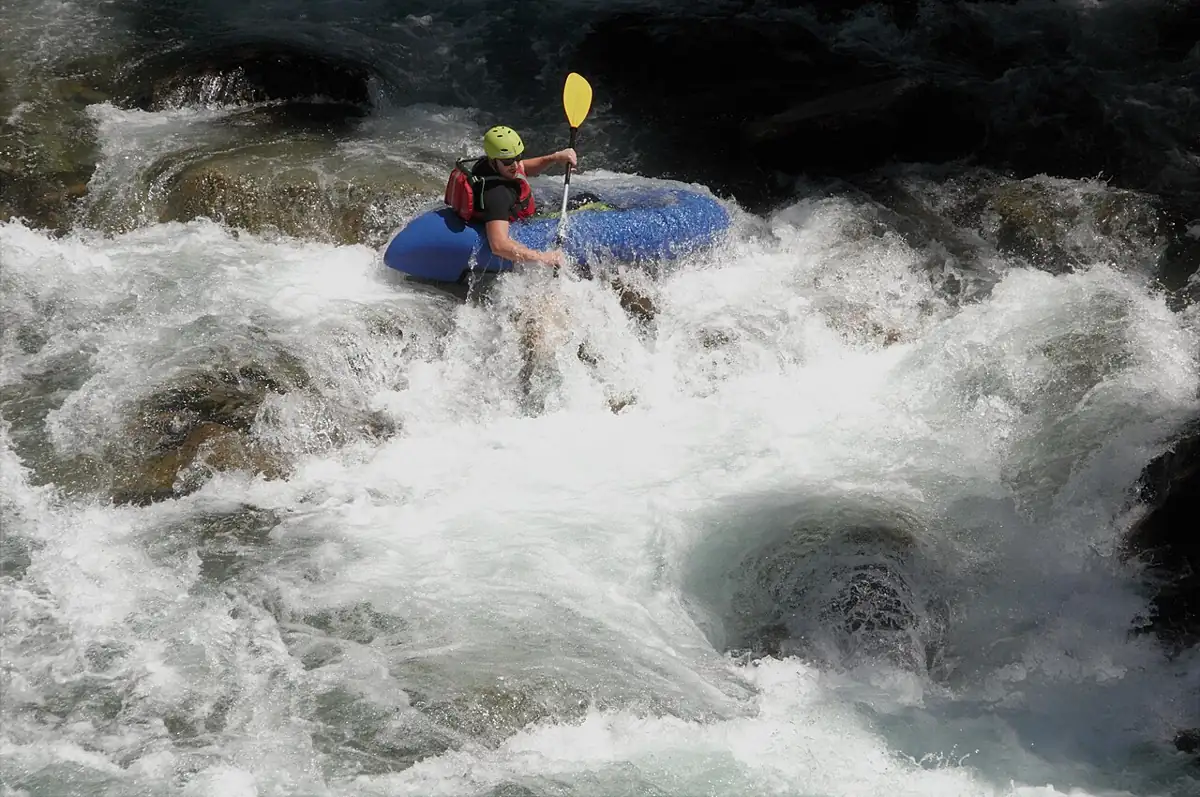
Trip notes · Victoria
Snowy River rafting from McKillops Bridge
Below McKillops Bridge the Snowy cuts a long, empty gorge through East Gippsland. In a wet spring it is one of the best multi-day whitewater trips in Victoria, and a packraft lets you walk the parts you would rather not run.
Last checked November 2026
The Snowy River rises on the Kosciuszko plateau in New South Wales, crosses into Victoria and runs south through some of the most remote country in the state before it reaches the sea at Marlo. The stretch most paddlers mean when they talk about Snowy River rafting starts at McKillops Bridge, a long steel bridge on the road between Bonang and Gelantipy. From there the river drops into a series of gorges inside Snowy River National Park, managed by Parks Victoria, with almost no road access for days.
Commercial rafting trips have run this section over the years, and private parties take rafts, kayaks and canoes through it when the water is up. A packraft suits it well. You can carry the boat around a rapid you do not like, and the light load makes a walk out possible if the river drops on you.
Route and access
McKillops Bridge is a long drive from anywhere. From Melbourne, allow most of a day through Gippsland and up through Buchan, or come in from the north via Bonang. The roads are narrow, steep and partly gravel, and some are closed after storms or during fire season. Check the Parks Victoria park page and VicTraffic before you leave.
The campground at McKillops Bridge sits on the river flats beside the bridge and is a good place to rig the night before. Below the bridge the river enters the gorge country quickly. The usual exits are further down the park, where tracks reach the river; work out your exit and shuttle before you launch, because the walk out from the middle of the gorge is long and steep.
| Stage | What to expect |
|---|---|
| McKillops Bridge | Campground, river flats, a gentle start |
| Upper gorge | Rapids start; boulder gardens and pool-drop water |
| Middle gorges | The most committing water, long sections with no easy exit |
| Lower river | The valley opens out; slower water and longer flat paddling |
Distances and the exact exit point depend on your shuttle, so plan the trip in days rather than kilometres. Three days is a fast trip at a good level; low water and portages can push it to five or six.
Flows and timing
Most of the year the Snowy at McKillops Bridge is too low for a comfortable trip. The river was heavily diverted for the Snowy Mountains Scheme, and the environmental flows now released from Jindabyne Dam help, but by the time the water reaches Victoria the level depends far more on rain in the catchment and on tributaries such as the Deddick and the Suggan Buggan.
Spring is the usual window. After a wet winter and good rain in September or October the river can hold a runnable level for weeks. Watch the gauge at McKillops Bridge on the Victorian government's water monitoring site and the BOM rainfall and flood warnings for East Gippsland. Read the guide to flows and gauges if you are new to tracking a hydrograph.
- From late winter, follow rainfall in the upper Snowy catchment on the BOM site.
- Check the McKillops Bridge gauge daily once a trip looks possible.
- Look for a steady or slowly falling level, and avoid launching on a sharp rise after heavy rain.
- Confirm road access and fire restrictions with Parks Victoria.
- Leave your trip plan and exit date with someone at home.
Summer storms can raise the river fast. If it rises and turns brown, get off, pull the boats high and wait it out.
Hazards
- Boulder rapids and sieves. Some rapids pile water through jumbled rock. Scout anything you cannot see the bottom of, and portage when in doubt.
- Wood. Floods bring down whole trees that wedge in channels. Expect new strainers after every big rain.
- Rising water. A storm in the catchment can turn an easy level into a pushy one overnight. Camp high.
- Heat and fire. Summer days in the gorge get very hot, and East Gippsland is high bushfire country. Check the Fire Danger Rating and total fire bans before and during the trip.
- Snakes. Brown snakes and tiger snakes live along the river. Wear boots on land, watch where you step around camp and carry a compression bandage.
Grades on the Snowy are given on the international scale, and the river difficulty classes page explains what they mean in a small boat. A Grade III rapid in a remote gorge asks more of you than the same grade near a road. Practise self-rescue with a loaded boat before you go.
Permits and rules
There is no river permit for private trips. Snowy River National Park rules still apply: camp in suitable sites, carry out all rubbish and follow Parks Victoria advice on fires, which are often banned in summer. Bury toilet waste well away from the water and camps, or carry it out. The Leave No Trace guide covers river camping habits.
Wear a life jacket that meets the Australian standard (AS 4758), and check the Victorian rules for your type of craft with Safe Transport Victoria before you go.
Camping
On the river you camp on sand and gravel banks. Pick sites well above the waterline and away from overhanging trees, which drop limbs without warning. Water from the river needs treating. Nights in spring can still be cold in the gorge, even after a hot day, so bring a warm layer and a dry change of clothes.
Packraft notes
- Take a whitewater packraft with thigh straps and a spray deck if you plan to run the harder rapids.
- Wear a helmet and a proper life jacket in every rapid.
- Pack light enough to portage. You will carry the boat more than once.
- Use dry bags clipped inside the boat or in the tubes, and bring a repair kit you have practised with.
Who the Snowy suits
This trip suits packrafters who already run Grade III water confidently and have done a few multi-day trips. Beginners should go with a guided group or a club, or start on the Glenelg River. For the rest of the state, go back to the Victoria trip notes.
Snowy River questions
Can you go Snowy River rafting without a guide?
Yes, if your group has solid Grade III skills, can self-rescue and is happy being days from a road. There is no river permit, but you should leave a trip plan with someone and carry a satellite messenger or PLB.
When is the best time for the Snowy below McKillops Bridge?
Spring is the usual window, from about September to November, when rain and snowmelt in the catchment lift the river. In a dry year it can be too low by early summer. Check the McKillops Bridge gauge and recent trip reports before you drive out.
Does Jindabyne release water into the Snowy?
Environmental flows are released from Jindabyne Dam, but by McKillops Bridge most of the water in the river comes from tributaries and rain in the catchment. Treat the gauge reading on the day as the only number that matters.
Where do you camp?
There is a Parks Victoria campground at McKillops Bridge for the night before you launch. On the river you camp on sand and gravel banks. Check fire restrictions and total fire bans on the CFA and Parks Victoria sites before you go.
Is there phone reception in the gorge?
Generally no. Carry a satellite messenger or a PLB, and tell someone your expected exit date and what to do if you are late.