Trip notes · Colorado
Packrafting Browns Canyon on the Arkansas
Browns Canyon is the stretch of the Arkansas most Colorado paddlers run first when they move up to Class III. In a packraft it makes a full, busy day: a string of named rapids with little flatwater between them.
Last checked November 2026
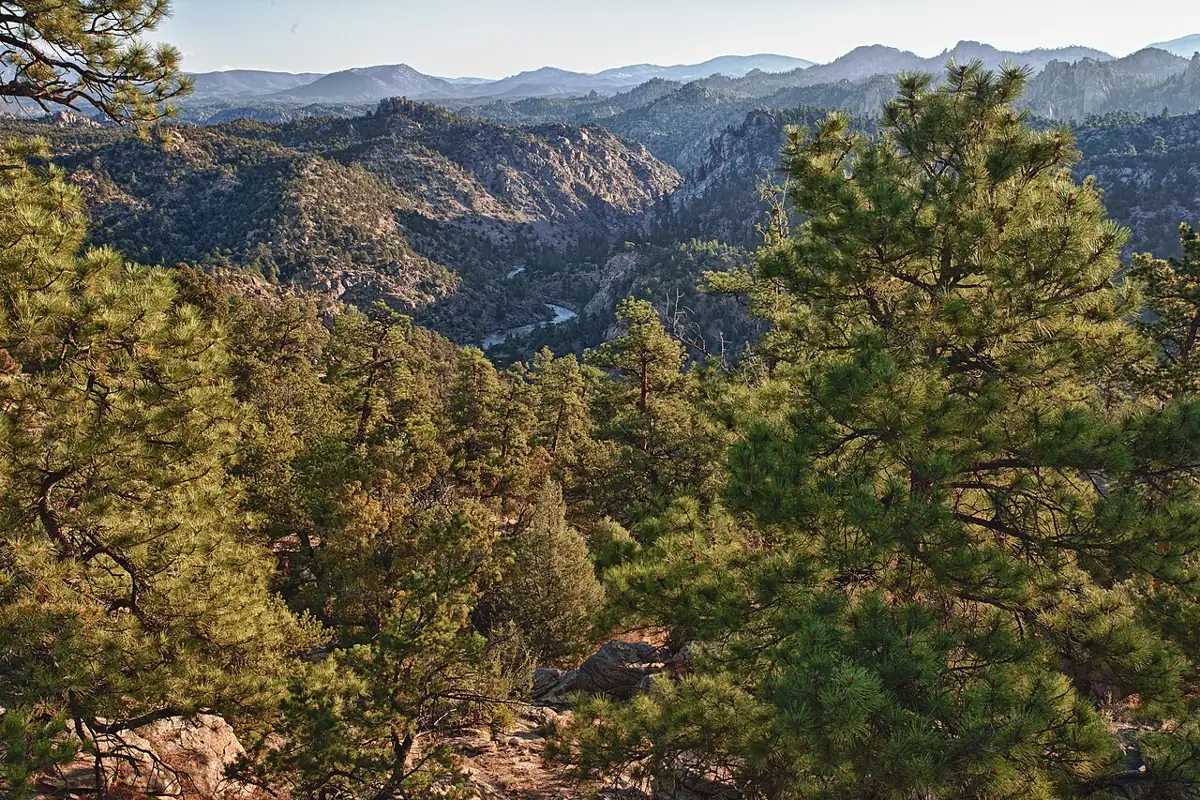
The Arkansas River between Buena Vista and Salida runs through a granite canyon that became Browns Canyon National Monument in February 2015. The monument covers roughly 21,600 acres of federal land in Chaffee County, managed jointly by the Bureau of Land Management and the U.S. Forest Service (the Salida Ranger District of the Pike and San Isabel National Forests). The river corridor itself is managed for recreation by the Arkansas Headwaters Recreation Area, a Colorado Parks and Wildlife unit that handles commercial and private boating along the upper Arkansas. Commercial outfitters run more trips here than on almost any other stretch of river in the country, so expect company on summer days.
Route and access
| Put-in | Take-out | Approx. miles | What you get |
|---|---|---|---|
| Fisherman's Bridge | Hecla Junction | about 10 to 11 | Warm-up miles, then the full canyon |
| Ruby Mountain | Hecla Junction | about 8 | The canyon without the lead-in |
| Hecla Junction | Stone Bridge | varies | Lower, easier water plus Seidel's Suckhole |
Ruby Mountain and Hecla Junction are both AHRA sites inside the monument, reached by dirt roads off US 285 and County Road 194. Ruby Mountain to Hecla is the most common packraft day. AHRA charges for day use at its sites, so buy a pass before you park and check current rules with the agency.
Passes and paperwork
You do not need a river permit to paddle Browns Canyon as a private boater. You do need a Colorado Parks and Wildlife parks pass to leave a vehicle at the Ruby Mountain or Hecla Junction recreation sites. Daily passes are sold at self-serve kiosks at the sites, and annual passes at the AHRA visitor center in Salida. The monument itself has no entrance fee. The BLM's Browns Canyon page lists the current arrangements.
AHRA sets daily boat capacities for the section from Fisherman's Bridge to Stone Bridge, separately for commercial and private boats, with higher limits on summer weekends and holidays. Private use of this section has been under review with AHRA's citizen task force and boating groups, and the agency asks private boaters to choose quieter days or other sections when they can. A permit system for private boats could follow if use keeps climbing, so check with AHRA before a summer weekend trip.
Rapids
Named rapids in the canyon include Canyon Doors, Pinball, Zoom Flume, Big Drop and Widowmaker, with plenty of smaller drops between them. Zoom Flume and Big Drop are the two most groups talk about. Both are Class III at normal summer flows and can rate harder at high water, with Zoom Flume often called III+. Below Hecla, Seidel's Suckhole is a hole worth scouting or walking at most levels, which is one reason many packrafters take out at Hecla.
None of these rapids is difficult for an experienced Class III boater. In a packraft, watch for holes that can hold a light boat, granite boulders just under the surface, and long swims in cold water if you come out above a rapid. If Class III is new to you, read what the difficulty classes mean and run the canyon first with a group that has done it.
How the canyon unfolds
From Ruby Mountain the river takes a short while to get going, then the walls close in and the rapids come in fairly quick succession, with short pools between them where a group can regroup. The rapids are mostly boulder-strewn drops and wave trains, so boat angle and timing matter more than power. If you miss the Hecla Junction ramp you are committed to the next stretch, so look at the take-out from the road before you launch.
| Rapid | Rough rating at summer flows | Packraft note |
|---|---|---|
| Canyon Doors | II+ to III | The first warm-up, where the walls close in |
| Pinball | III | Rocky; keep your angle |
| Zoom Flume | III to III+ | One of the two big ones; scout or follow a group that knows it |
| Big Drop | III | The other one groups talk about; scout if unsure |
| Widowmaker | III | Watch for holes |
| Seidel's Suckhole (below Hecla) | A hole to respect at most levels | Scout or walk; many packrafters finish above it |
Ratings shift with flow. CPW describes Browns as Class III-IV overall and a wild ride at high water, so use the table as a rough guide and look at the rapids yourself.
Flows and season
The Arkansas rises with snowmelt from late May into late June, then holds a moderate summer flow helped by upstream reservoir releases under a flow program for recreation and fish. The usual reference is the USGS gauge near Nathrop. At peak runoff Browns Canyon becomes bigger and faster, with less time between rapids. Most packrafters prefer mid-summer and early fall flows. The flows and gauges guide explains what to look for on the hydrograph.
That flow program is the Upper Arkansas Voluntary Flow Management Program. In most years it aims to hold about 700 cfs at the Wellsville gauge below Salida from July 1 to August 15 to support rafting, using water released from upstream reservoirs when natural flow falls short. The amount of water set aside each year is limited, so in a dry year the target may not hold. Outside that window the target is much lower. The Nathrop gauge (USGS 07091200) sits upstream of the canyon and is the reading most Browns paddlers quote; the Wellsville gauge is further downstream, below Salida.
| Season | What Browns is like | Packraft verdict |
|---|---|---|
| Late May to late June | Peak runoff, cold, fast, few eddies | Experts only; most packrafters wait |
| July to mid-August | Steady flows from the flow program, busiest with rafts | The main packraft season |
| Late August to September | Lower and more technical, fewer people | Good for a first trip with an experienced group |
| October onward | Low and cold, quiet | Fine for strong paddlers dressed for cold water |
Water temperature stays cold through June, and afternoon thunderstorms are common in July and August.
Hazards
- Holes in Zoom Flume, Big Drop and below Hecla that can hold or flip a light boat
- Granite boulders just under the surface, especially at low water
- Cold snowmelt early in the season, when a swim can trigger gasping and fast loss of strength
- Crowds of rafts in the main rapids, which limit your choice of line and eddy
- Lightning and sudden wind from afternoon storms in midsummer
Colorado boating law requires a properly sized life jacket on board for every person, and children under 12 must wear one. On Class III water, wear yours. The guide to packraft life jackets explains which types fit well in a small boat.
Packraft notes
- Use a whitewater packraft with thigh straps. You will want them in Zoom Flume and Big Drop.
- A self-bailing packraft works well here: warm summer air, frequent waves, and no long flatwater stretches to slow you down. A spray deck is the alternative.
- Helmet, a PFD that fits and a throw bag are standard. Many groups also carry a pin kit. The helmet guide covers fit and certification.
- Practice self-rescue before you need it. A swim in Browns usually ends in an eddy within a short distance, but not always.
- In June or after a cold front, a drysuit or a good layering system makes a swim far less serious. See layering for cold water.
Who Browns Canyon suits
Browns suits packrafters who have run Class II comfortably, can roll into an eddy without thinking about it, and have swum a rapid and got back into their boat. Plenty of people run it as their first Class III canyon. Few should run it as their first moving-water trip. If you are not there yet, spend a few days on easier water or take a whitewater course first. The page on learning with an instructor describes what a good packraft course covers.
A sample Browns day
- Check the Nathrop gauge the evening before and compare it with recent reports. If flows are near peak runoff, choose another section.
- Buy a daily parks pass if you do not have an annual one, and leave a shuttle vehicle at Hecla Junction.
- Drive to Ruby Mountain, rig boats, and agree on signals, boat order and who leads each rapid.
- Launch after the first wave of commercial trips has cleared, or early enough to stay ahead of them.
- Scout Zoom Flume and Big Drop from shore if anyone in the group is unsure.
- Take out at Hecla Junction and count heads before you load the car.
Camping
Browns Canyon is normally run as a day trip. AHRA and the BLM manage camping in the area, and there are developed campgrounds nearby along the river, including at Ruby Mountain and Hecla Junction. Check availability and rules with AHRA.
Both sites have restrooms, boat ramps and picnic areas, so they make a convenient base for two days on the river. Salida and Buena Vista are close for food and supplies.
Where to go next
For a smaller Class III warm-up, try the Foxton run near Denver. The Upper Colorado from Pumphouse is easier and suits an overnight. More options are on the Colorado trips page.
Browns Canyon FAQ
Do private boaters need a permit for Browns Canyon?
Not at present. You need a CPW parks pass to park at Ruby Mountain or Hecla Junction, and AHRA tracks private use against daily capacity limits, so check for changes before you go.
What flow is best for a packraft in Browns?
Most packrafters prefer mid-summer and early fall, when the flow program holds the river at moderate levels. Peak runoff in June is much bigger and faster and suits only strong boaters.
Which gauge do people use?
The USGS gauge on the Arkansas River near Nathrop (07091200), upstream of the canyon. The Wellsville gauge below Salida is the reference for the summer flow program.
Can I run Browns as my first Class III?
Many people do, but only after solid Class II experience and with a group that knows the canyon. Scout the main rapids and walk anything you are not ready for.
Where should I take out?
Hecla Junction, the usual end of the canyon run. Below it the river continues toward Stone Bridge, with Seidel's Suckhole along the way.