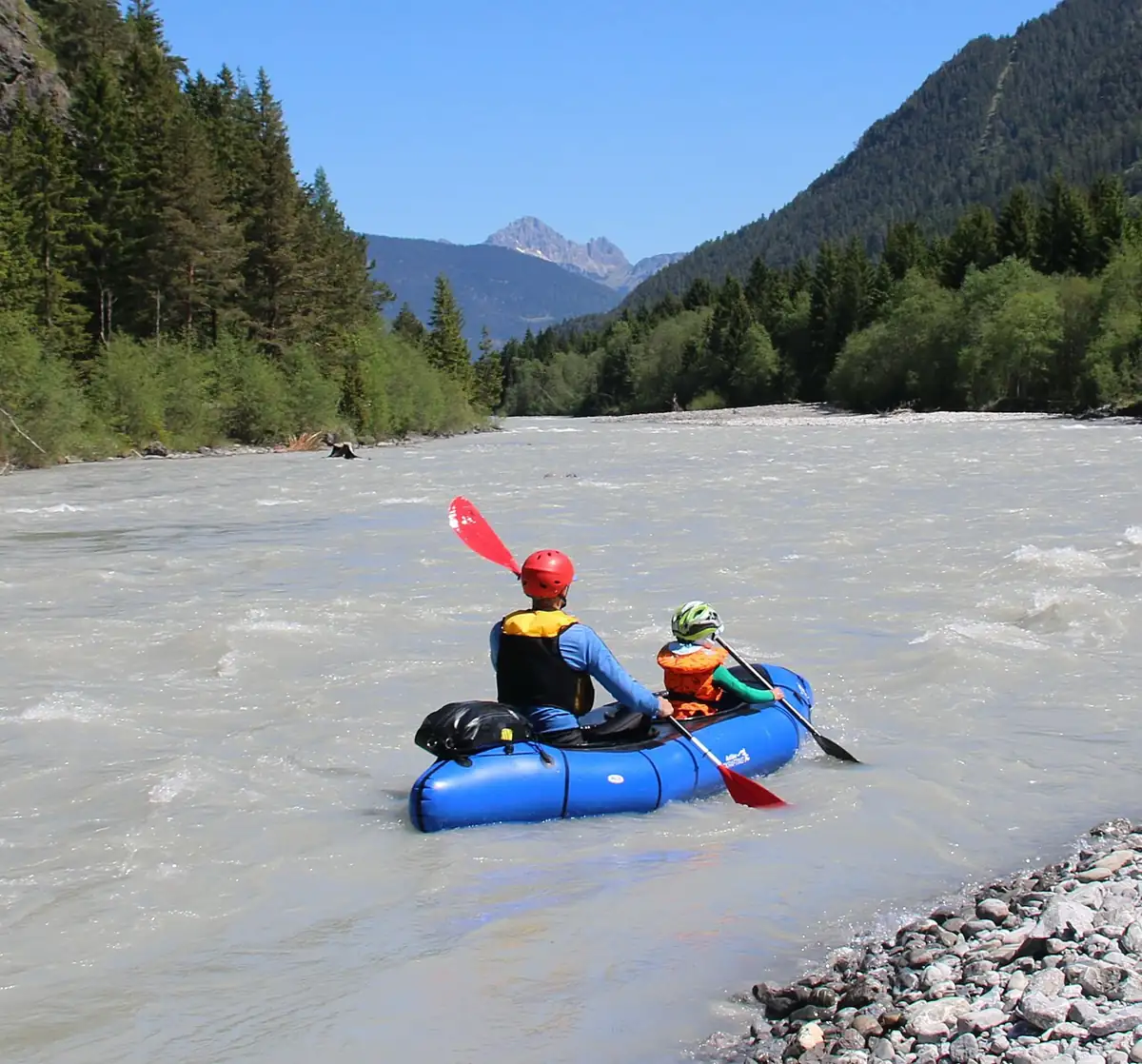
Trip notes · New Zealand
Packrafting New Zealand
For Australian packrafters, New Zealand is the obvious first trip abroad. It is a short flight away, the South Island has hundreds of cold, clear mountain rivers, and a network of backcountry huts makes hike-and-float trips simple to plan.
Last checked November 2026
The South Island is about three hours' flight from Sydney or Melbourne, and Queenstown has direct flights from several Australian cities. Within a day of landing you can be walking up a valley with a packraft on your back. The South Island has braided glacial rivers, steep beech forest and a backcountry hut system run by the Department of Conservation (DOC) that lets you plan multi-day trips without carrying a tent.
New Zealand rivers are colder, faster and more changeable than most Australian ones. Treat even an easy-looking braided river with respect.
Packrafting around Queenstown
Queenstown is the usual base for packrafting trips in Otago. To the north-west, the road to Glenorchy leads to the Dart and Rees valleys at the head of Lake Wakatipu, where tracks and rivers combine into hike-and-float routes inside or near Mount Aspiring National Park. Guided packrafting trips run in the area, which is a sensible start if you have never paddled glacial water.
The Shotover and Kawarau rivers close to town are known for commercial rafting and jetboating. Jetboats move fast and can appear around a bend with little warning, so find out where and when they operate before you paddle a jetboat river, and stay visible. Ask DOC, local guides or the Queenstown i-SITE about current access.
Wanaka, the Southern Alps and further
From Wanaka, valleys such as the Matukituki give access to braided rivers below the main divide. Further north, the West Coast rivers are steep, wet and committing, and many are reached by helicopter for experienced paddlers. In the North Island, the Whanganui River is a multi-day canoe journey that DOC runs as a Great Walk, with bookable huts and campsites; it is flat to Grade II and a good choice for packrafters who want an easy, organised trip.
| Area | What it suits | Notes |
|---|---|---|
| Queenstown and Glenorchy | Hike-and-float trips, guided packrafting | Glacial water; jetboats on some rivers |
| Wanaka | Braided valley rivers below the divide | Fast-rising rivers after rain |
| West Coast | Steep, remote whitewater | Often heli access; for experts |
| Whanganui River (North Island) | Easy multi-day journey | DOC Great Walk; book huts and campsites |
Flows and seasons
New Zealand's seasons line up with Australia's. The main packrafting season runs from about November to April. In spring, snowmelt and rain keep rivers high and cold; in late summer many are lower and clearer. Regional councils publish river flow data, so for Otago check the Otago Regional Council flow pages, and use MetService forecasts and heavy rain warnings. West Coast rivers can rise by metres overnight. If you are not sure, wait a day.
Glacial rivers rise during warm afternoons as melt increases, so cross and paddle them in the morning where you can. The flows and gauges guide explains how to read the data, and reading whitewater covers braided channels.
Biosecurity: Check, Clean, Dry
Biosecurity officers may inspect your gear at the airport. Gear that is clean and dry is quicker to clear. Felt-soled footwear holds water and organisms and is best left at home.
Hazards
- Cold water. Snowmelt and glacial rivers are cold even in summer. Read cold-water safety and pack a drysuit or full cold-water layers.
- Rapid rises. Heavy rain in the mountains can flood a river in hours. Camp high and carry spare days.
- River crossings on foot. Many tramping deaths in New Zealand involve river crossings. Use the packraft or wait.
- Braided channels and wood. Pick the main channel and watch for trees in the braids.
- Weather on the main divide. Storms move in quickly and can bring snow in summer.
- Sandflies. Harmless but relentless; bring repellent and long sleeves.
Carry a PLB, which you can hire in New Zealand, and leave your intentions with someone through the AdventureSmart outdoor intentions form. Practise self-rescue before a remote trip.
Huts, permits and rules
There is no general permit to paddle a river. DOC runs the huts and campsites in the national parks; many backcountry huts use hut tickets or a pass, and Great Walk huts and campsites must be booked ahead. Some land, including high-country stations, needs permission to cross. Check the DOC site for each track and the latest alerts. Life jacket rules vary by region, so check the regional navigation bylaws for where you paddle.
Getting there from Australia
- Australian citizens can travel to New Zealand without a visa. Other passport holders should check New Zealand Immigration requirements.
- A packed packraft, paddle and PFD usually fit in a checked bag. Check your airline's weight limits.
- Stove fuel cannot fly. Buy gas canisters in Queenstown, Wanaka or Christchurch.
- Get travel insurance that covers packrafting and whitewater, and check what grade it allows.
- Shuttles and water taxis can link valleys; book ahead in summer.
Packraft notes
- A whitewater packraft with thigh straps and a spray deck handles cold, pushy water better than an open boat.
- Bring a helmet for any river with rapids.
- Pack the packing checklist items for cold, wet weather.
- Use cargo zippers or a low load to keep the boat stable.
Who New Zealand suits
New Zealand suits Australian packrafters with solid Grade II skills who want colder, faster water and longer hike-and-float trips. Beginners should start on a guided trip or on the Whanganui. For trips further away, see Alaska, or go back to further afield.
New Zealand packrafting questions
Can I go packrafting near Queenstown?
Yes. The rivers around Queenstown and Glenorchy, including the Dart and Rees valleys, are used for hike-and-float trips, and guided packraft trips run in the region. The Shotover and Kawarau are best known for commercial rafting and jetboats; check current conditions and boat traffic before paddling them yourself.
Do I need to clean my packraft before going to New Zealand?
Yes. New Zealand has strict biosecurity rules. Clean and dry your boat, paddle, footwear and gear before you fly, and declare used outdoor equipment on arrival. Inside the country, follow the Check, Clean, Dry rules between waterways to stop the spread of didymo.
What grade are New Zealand rivers?
New Zealand uses the same Grade I to VI scale as Australia. Many South Island valley rivers are braided Grade I-II, while gorges can be Grade III to V. Grades change a lot with flow.
When is the best time to packraft in New Zealand?
Most trips happen between about November and April. Spring brings snowmelt and higher, colder rivers; late summer can be lower and warmer. Heavy rain can raise rivers in hours at any time.
Do I need a permit?
There is no general river permit for private trips, but DOC hut tickets, passes or bookings apply on many routes, and Great Walk huts must be booked. Some rivers have commercial jetboat operations, and some land access needs permission.