Trip notes · Wyoming
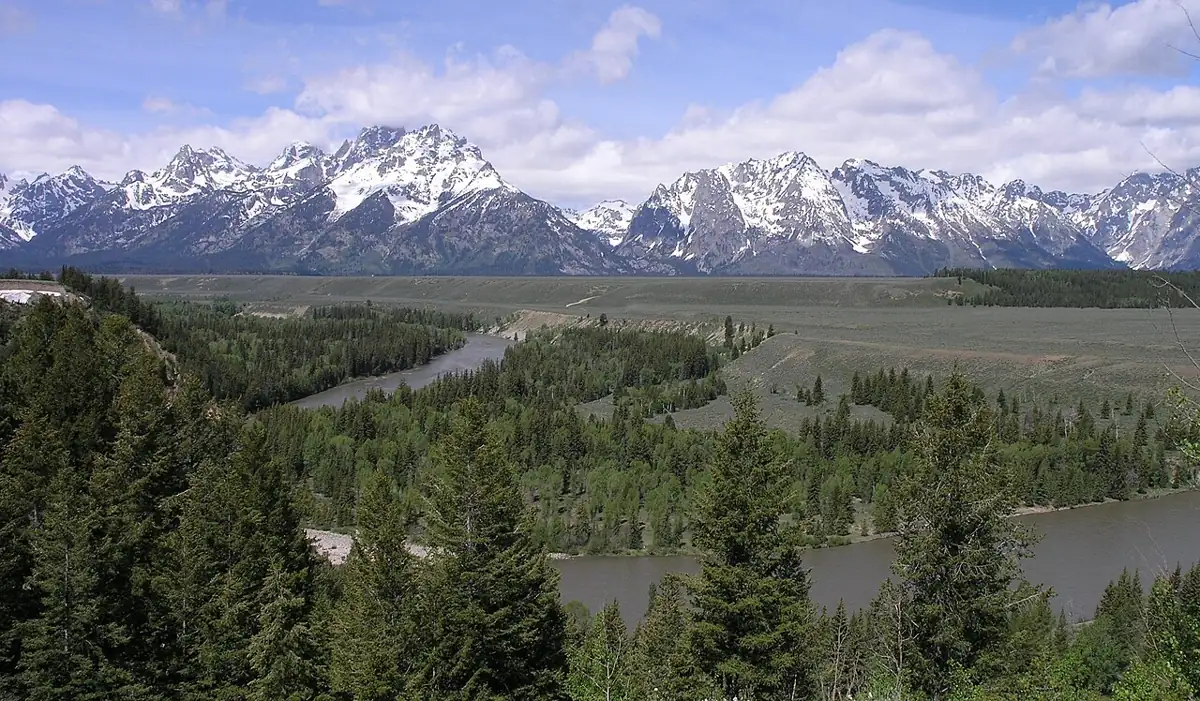
Snake River and the lakes of Grand Teton
Grand Teton is one of the easiest places to paddle a packraft right under big mountains. The paperwork is simple once you know it, and the Snake below the dam is harder than it looks from the road.
Last checked November 2026
Grand Teton National Park allows human-powered boats on the Snake River and on a set list of lakes, and it closes all other park waters to boats. Before you launch anywhere in the park, you need a park boat permit and an aquatic invasive species (AIS) inspection. A packraft that has been on another river or lake must be clean, drained and dry. Check which waters are open each season and where inspections are held with the park, because the details change.
Permits, decals and inspection
Three separate requirements apply, and people often mix them up.
| Requirement | Who issues it | Packraft notes |
|---|---|---|
| Non-motorized boat permit | Grand Teton NP (Recreation.gov, park visitor centers or ranger stations, or by mail) | Required for every watercraft in the park, paddleboards included. Display the sticker on the boat. |
| Wyoming AIS decal | Wyoming Game and Fish Department, online or through vendors | Inflatables 10 feet or shorter are exempt under current state rules, which covers most packrafts. Check your boat's length. |
| AIS inspection | Park inspection stations | Everyone stops, decal-exempt boats included. Out-of-state boats need inspection before launching in Wyoming waters. |
Fees are set by the park and the state and change from year to year, so check both before you go. The permit is valid for the season, which makes it good value if you plan to paddle several lakes.
If you keep gear inside the tubes, the inspector may ask you to empty them. Clearing the cargo zipper storage before you arrive saves time. A boat that is still damp from a trip in another state may be held or decontaminated, so plan a dry day between waters.
Which lakes are open
The park lists ten lakes open to non-motorized boats: Jackson, Jenny, Phelps, Emma Matilda, Two Ocean, Taggart, Bradley, Bearpaw, Leigh and String. Every other lake in the park is closed to boats, including popular backcountry lakes that people hike to with a raft in their pack. Delta Lake below the Grand Teton is not on the list. Confirm the list with the park the season you go.
| Lake | Access | What it suits |
|---|---|---|
| Jackson | Drive-to beaches and ramps | Island hopping at sunrise; big-water crossings only in calm weather |
| String and Leigh | Short walk; String to Leigh is a short portage | Beginners and first overnight paddles in a sheltered setting |
| Jenny | Drive-to | Calm morning paddles below Cascade Canyon |
| Phelps | Short hike from the Laurance S. Rockefeller Preserve | Classic "hike your boat in" day |
| Taggart, Bradley | Hike-in trails | Lighter boats and a longer approach |
| Emma Matilda, Two Ocean | Trailheads east of the main road | Quieter water, bear country |
On Jackson Lake, afternoon wind comes up fast and builds steep chop across long fetches. A packraft is slow into wind, so stay close to shore and cross in the morning. Phelps Lake catches wind blowing out of Death Canyon, which can turn a short crossing into a long one.
Hiking a packraft to a lake
Grand Teton's lakes are where many people first carry a packraft on their back. Two light boats fit in one daypack with paddles strapped outside. A few points help:
- Inflate at the shore with a pump bag. The inflation guide covers topping off with your mouth valve once the boat has cooled in the water.
- A light lake boat is fine for most lakes; see ultralight packrafts.
- Wear your life jacket on the water. Park rules require one aboard for each person, and children under 13 must wear one.
- Snowmelt lakes stay cold into August. A swim is short and unpleasant even on a hot day.
The Snake River
Below Jackson Lake Dam, the Snake runs south through the park past Oxbow Bend toward Moose. The upper miles are gentle and popular with paddlers watching wildlife. Further down, the river splits into braided channels where logjams and sweepers move every spring. The NPS publishes a floating guide by section; read it, and scout the braided reaches from shore if you can. Downstream of the park, the Snake Canyon has bigger whitewater outside NPS jurisdiction.
| Section | Distance | NPS rating | Notes |
|---|---|---|---|
| Jackson Lake Dam to Pacific Creek | About 5 miles | Beginner | Calm; launch below the dam, never within 1,000 feet of it. Water at Pacific Creek Landing is swift. |
| Pacific Creek to Deadman's Bar | About 10 miles | Intermediate | Steeper gradient, braided channels, route-finding |
| Deadman's Bar to Moose | About 10 miles | Advanced | The hardest stretch in the park; most accidents happen here |
| Moose to Wilson | Roughly 12 to 14 miles | Varies | Mostly outside the park; braided, with frequent debris |
The park's ratings describe how hard a stretch is for an average river user, which is a different scale from whitewater classes. Deadman's Bar to Moose has no big rapids, yet fast current pushes into logjams and sweepers, and a channel that was open last year may be blocked this year, so route-finding matters more than rapid-running skill. If you are new to moving water, read up on spotting strainers and eddies and start on the upper section.
Flows and timing
Flows below the dam are controlled by releases from Jackson Lake. Further down, tributaries add snowmelt, so the river is highest and coldest in late spring and early summer. Paddlers watch the USGS gauges near Moran and at Moose. A packraft goes well on the moderate summer flows, while early-season high water makes logjams more dangerous.
Snake River rules
- Only human-powered rafts, canoes, drift boats and kayaks are allowed. Inner tubes and air mattresses are not.
- Pacific Creek, Cottonwood Creek, Buffalo Fork and the Gros Ventre River are closed to boats.
- Fires are not allowed along the river.
- Pets are not allowed on the river or on boats on the river. If you usually take a dog, see the notes on paddling with a dog and choose somewhere else.
Hazards
- Lakes and river are fed by snowmelt. Read cold-water safety and dress for a swim.
- Afternoon wind on the big lakes gets more packrafters into trouble than anything else here.
- Strainers and logjams are the main river hazard, especially on the Snake below Pacific Creek.
- Grizzly and black bears, moose and bison live along the river and lakeshores. Carry bear spray and follow the park's food-storage rules.
- Summer thunderstorms build over the range most afternoons, so plan to be off open water before they arrive.
Logistics and camping
Jackson Hole has an airport inside the park boundary, and the town of Jackson is the main supply stop. Shuttles on the Snake are short car shuffles between landings, and many packrafters use a bike for the return leg. Campgrounds along the main road fill early in summer; backcountry camping, including the lakeshore sites on Jackson Lake reached by boat, needs a separate backcountry permit from the park.
Most days work best with an early start: the lakes are calmer in the morning, and you are usually off the water before afternoon storms build over the peaks.
Skill level and who it suits
Grand Teton is a good fit for new packrafters and for road trippers who want to paddle below big peaks without committing to a remote trip. The lakes need only basic paddle strokes and good judgment about wind. The Snake from the dam to Pacific Creek suits confident beginners; the lower sections need real moving-water skills and the ability to avoid strainers. If you are just starting, the beginner's primer covers the basics to learn first.
Do I need a permit to packraft in Grand Teton?
Yes. Every watercraft needs a park non-motorized boat permit and must pass an AIS inspection. Most boats also need a Wyoming AIS decal.
Does a packraft need the Wyoming AIS decal?
Under current state rules, inflatable boats 10 feet or shorter are exempt from the decal. They still must stop at a park inspection station.
Can I take a packraft to any backcountry lake?
No. Only ten named lakes and the Snake River are open to boats. Delta Lake and other backcountry lakes not on the list are closed.
Which Snake River section is best for a first float?
Jackson Lake Dam to Pacific Creek, about five miles of calm water. The park rates Deadman's Bar to Moose as the most difficult stretch.
Can my dog ride in the packraft?
Not on the Snake River, where pets are banned on the water. Check the park's current pet rules before planning a lake paddle with a dog.
For multi-day wilderness floating nearby, see Montana's Bob Marshall. For something far more remote, there is Alaska. Other trips are on the further afield page.